- Company
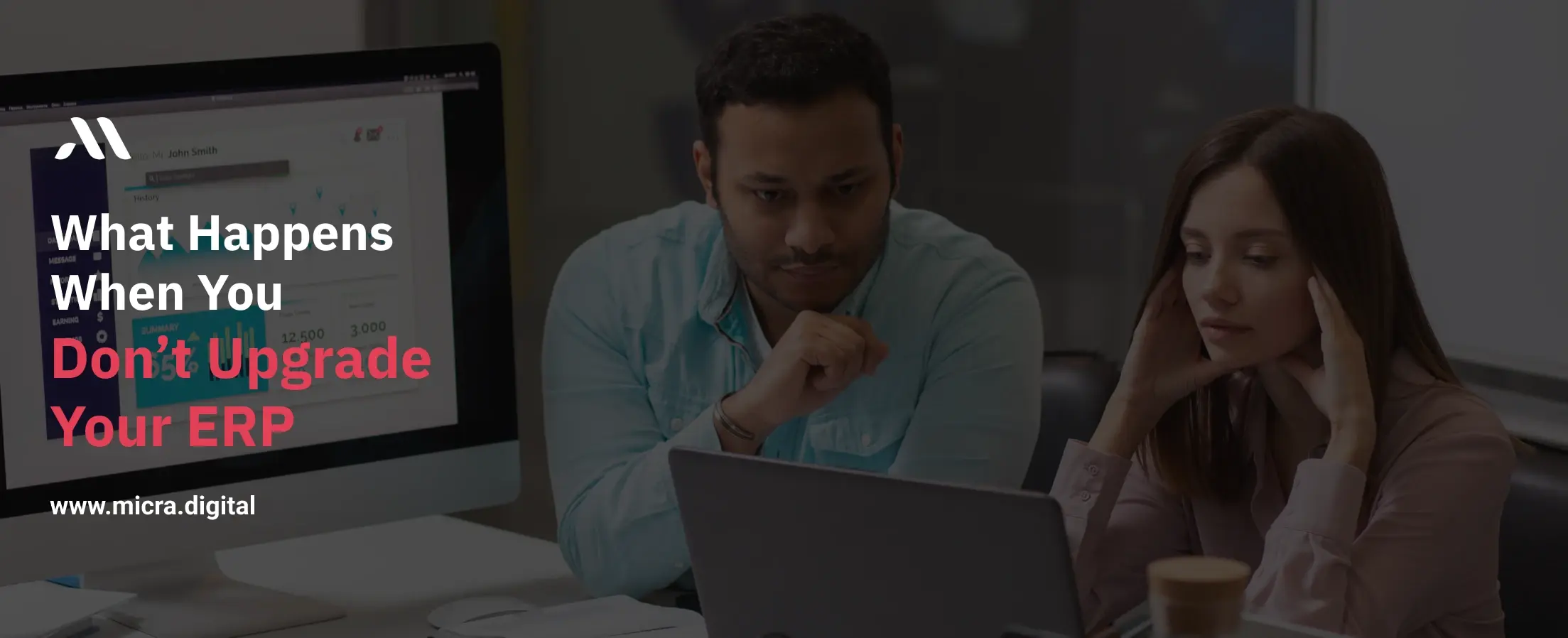
In today’s fast-changing business environment, using outdated systems is like running a race with one leg tied. Your ERP (Enterprise Resource Planning) software may have served you well for years, but technology continues to evolve, customer expectations shift, and new challenges emerge. If you’re still using an older ERP version, your business might already be paying the price without realizing it.
In this blog, Micra Digital explains why upgrading your ERP is critical, what happens when you delay it, and how platforms like Odoo ERP help businesses stay secure, efficient, and future-ready.
Also Read: Odoo ERP and Data Security: How to Protect Your Business Information
An ERP system acts as the central nervous system of your business, connecting departments like accounting, HR, inventory, manufacturing, sales, and customer service. It ensures smooth data flow, accurate reporting, and efficient decision-making.
Just like your smartphone or laptop, your ERP also requires regular updates to stay compatible, secure, and efficient.
When you don’t upgrade your ERP, you risk performance issues, security vulnerabilities, and operational inefficiencies that directly affect your bottom line.
.jpg)
Outdated ERP versions often lack the latest security patches and encryption standards. Cybercriminals target older systems because they’re easier to exploit.
Without upgrades:
Old ERP systems struggle to handle new data volumes, integrations, and workloads. As your business grows, the ERP can slow down or crash more frequently.
Today’s businesses rely on apps like CRM, eCommerce platforms, analytics dashboards, and marketing automation tools.
Older ERPs are often incompatible with modern APIs or third-party systems.
That means:
The older your ERP, the more expensive it becomes to maintain. Finding skilled developers or getting support for legacy systems can be difficult and costly.
Modern ERPs come with AI-driven dashboards and real-time analytics that empower smarter decisions.
By staying on an old version, you lose access to:
Outdated systems affect the people who use them most, your team and customers.
In time, this leads to reduced productivity, poor morale, and lost business opportunities.
You should consider upgrading when:
If any of these sound familiar, it’s time to act before inefficiency becomes your new normal.
Upgrading isn’t just about keeping up with technology; it’s about future-proofing your business.
Here’s what you gain by moving to a modern ERP like Odoo:
Better Security
Automatic updates, multi-level authentication, and data encryption protect your business from cyber threats.
Faster Performance
Optimized databases and scalable cloud architecture ensure smooth operations as your company grows.
Improved Integration
Easily connect CRM, HR, Accounting, POS, eCommerce, and Analytics in one unified system.
Smarter Insights
Get AI-based reporting, demand forecasting, and real-time data visualization to make informed business decisions.
Reduced Costs
Cut IT expenses, maintenance overheads, and data management errors while improving overall efficiency.
Manufacturing
Legacy ERPs can’t handle real-time production tracking, IoT integration, or quality control analytics, leading to inefficiencies and delayed deliveries.
Retail
Old systems struggle with omnichannel selling and inventory sync across online and offline stores, causing stock mismatches and unhappy customers.
Healthcare
Unpatched software poses privacy risks for patient data and violates compliance requirements like HIPAA or GDPR.
Education
Institutions relying on old ERPs face issues with student data security, slow reporting, and limited automation for admissions or fee management.
Restaurants
Outdated POS and inventory modules create billing delays, inaccurate stock reports, and poor visibility across branches.
Delaying your ERP upgrade might seem like a way to save money, but in reality, it costs more in the long run.
You risk data loss, inefficiency, and missed opportunities while your competitors move ahead with modern, cloud-based systems.
With Odoo ERP, you get a platform that’s flexible, secure, and scalable, built to grow with your business.
And with Micra Digital as your ERP partner, you’ll have a team that ensures your upgrade journey is safe, strategic, and successful.
No. With expert migration, your data is securely transferred with full backups.
Frequent crashes, slow performance, lack of integration, and outdated UI are major red flags.
Yes, Odoo is flexible and customizable for manufacturing, retail, healthcare, education, and hospitality sectors.
Let Odoo take your business to the next level!
Contact us and take the next step!
Follow Our Adventures!

Ready to launch your next project?
Company
Copyright © 2020. micra.digital. All rights reserved.