- Company
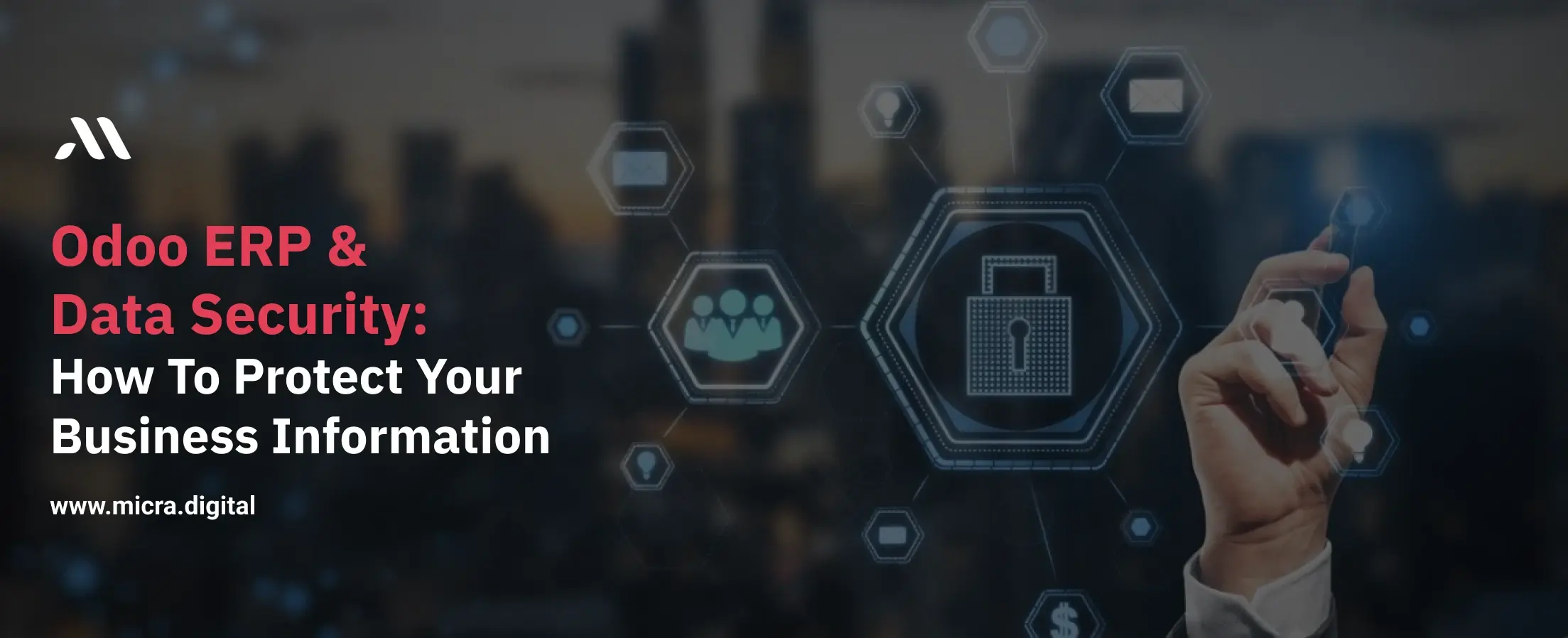
In this digital age, data is one of the most valuable assets a business owns. From financial records and customer details to internal communications and operational reports, every piece of information holds significance. With rising cybersecurity threats, it’s essential to ensure your data remains protected.
This is where Odoo ERP (Enterprise Resource Planning) plays a major role. Odoo not only integrates all your business operations into one unified system but also provides advanced security mechanisms to safeguard your critical information.
In this blog, we’ll explore how Odoo ERP enhances data security, best practices to protect your business information, and why partnering with experts like Micra Digital ensures you get the most secure ERP setup.
Also Read: How ERP Boosts Productivity Across Departments
Before diving into how Odoo ensures data protection, let’s understand why ERP security matters.
An ERP system acts as the central hub of business operations, connecting departments like finance, HR, sales, inventory, and production. This interconnectedness also means that if the ERP is compromised, all business data is at risk.
Some common data security challenges include:
Odoo’s architecture and security protocols are designed to tackle these challenges head-on.
.jpg)
Odoo allows you to define user roles and permissions precisely. Each employee only accesses data relevant to their job. For example, the HR team can view employee details, while sales staff can access leads and orders, not salary data or confidential reports.
Benefit: Limits data exposure and reduces human error or intentional misuse.
All Odoo databases are isolated per client instance, meaning your company’s data is never mixed with another’s. This ensures data separation and protection at the core level.
Benefit: Prevents cross-company leaks and ensures compliance with data protection standards.
Odoo uses SSL (Secure Socket Layer) encryption to protect data during transmission. Whether your team works from the office or remotely, all interactions between the client and the server remain encrypted and secure.
Benefit: Protects against eavesdropping and data interception.
Data loss can occur unexpectedly due to system crashes, human error, or cyber incidents. Odoo supports automated backups and cloud storage to ensure data recovery is always possible.
Benefit: Keeps business operations running smoothly even in emergencies.
To strengthen user login security, Odoo supports two-factor authentication, adding another verification layer beyond passwords.
Benefit: Reduces risks of unauthorized system access.
Odoo tracks all user activities, logins, edits, transactions, and record deletions, providing a transparent audit trail for compliance and accountability.
Benefit: Detects unusual activities early and maintains data integrity.
Even with Odoo’s robust features, businesses must follow best practices to maximize data security:
How ERP Secures Data Across Different Industries
Every industry handles different types of sensitive information, customer details, financial data, supplier contracts, medical records, or student profiles. A data breach in any of these areas can cause financial loss, reputational damage, and legal troubles.
Odoo ERP helps businesses across industries protect their critical information by combining access control, encryption, backups, and audit trails all within one system. Let’s see how it works across key sectors:
Manufacturing companies deal with product designs, supplier pricing, and machinery data, all of which are highly confidential.
How ERP helps:
Retailers handle thousands of customer records and payment details daily, a prime target for cybercriminals.
How ERP helps:
Hospitals and clinics manage patient medical records, prescriptions, and billing information, all requiring strict confidentiality and legal compliance.
How ERP helps:
Schools and universities store sensitive data, including student details, exam records, and financial information, which must be secured.
How ERP helps:
In the modern business landscape, data protection is not optional; it’s essential.
With Odoo ERP, you get a secure, integrated platform that connects every department while keeping your information protected through encryption, access control, and continuous monitoring.
And with Micra Digital as your ERP partner, you gain more than just software; you gain a secure digital foundation for sustainable business growth.
Yes, Odoo uses advanced encryption and isolated databases to ensure complete data privacy for every client.
Daily automated backups are recommended, along with weekly external copies for redundancy.
Yes, Odoo follows GDPR principles and allows you to manage user consent, data access, and deletion requests easily.
Micra Digital provides ERP installation, configuration, and ongoing security monitoring to ensure your system stays protected 24/7.
Let Odoo take your business to the next level!
Contact us and take the next step!
Follow Our Adventures!

Ready to launch your next project?
Company
Copyright © 2020. micra.digital. All rights reserved.