- Company
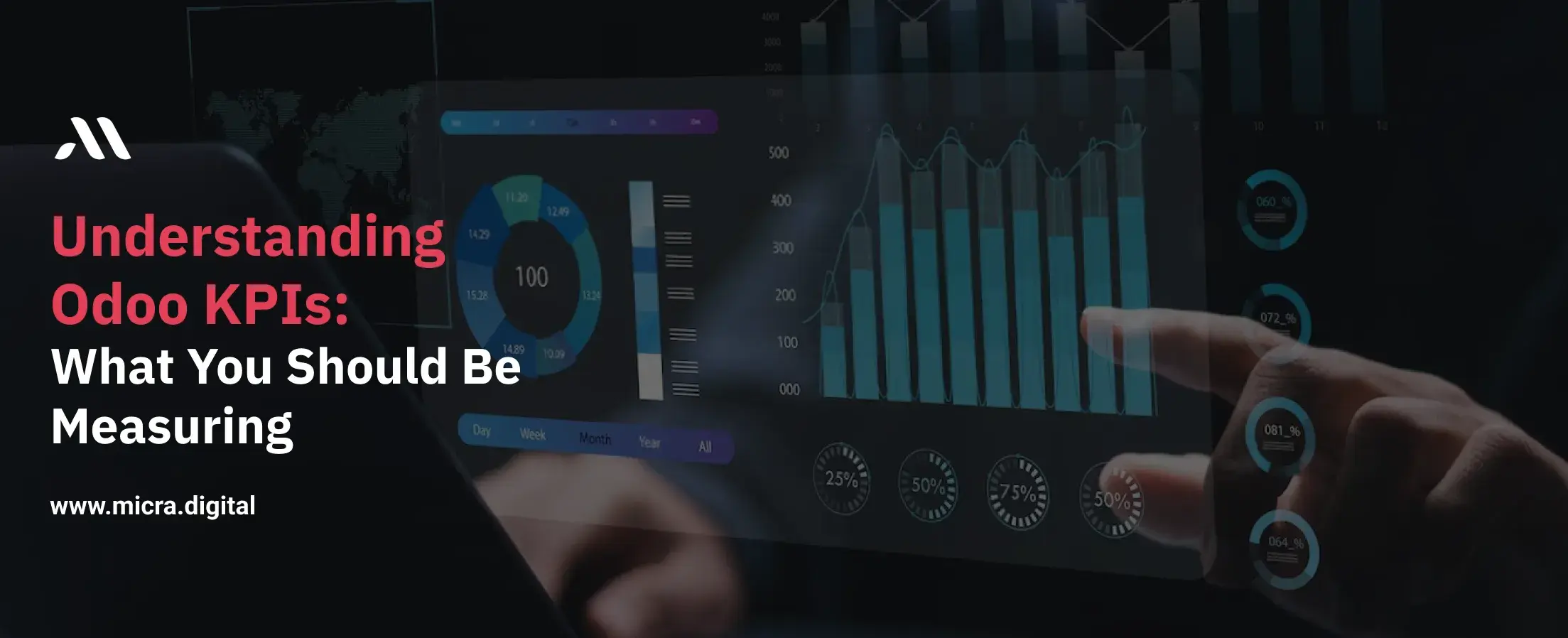
To truly succeed, businesses must move beyond just collecting data. They need to understand what that data means and how to use it to make better decisions. This is where Key Performance Indicators, or KPIs, come into play.
KPIs are specific, measurable values that show how effectively a company is achieving its business objectives. When paired with a powerful ERP software like Odoo, KPIs become the eyes and ears of your organization, providing real-time insights into your performance.
They tell you if you're on track to meet your goals, where you're excelling, and, critically, where you need to make changes. This in-depth guide will explain the importance of Odoo KPIs, what you should be measuring across different industries, and how to use the capabilities of your Odoo ERP to track these vital metrics for sustainable growth.
Also Read: Everything You Can Automate in Odoo: Tips for Successful Implementation
Think of your Odoo ERP as the engine of your business. Without a dashboard of indicators, you wouldn't know if the engine is running efficiently, if you're low on fuel, or if you're heading in the right direction. KPIs provide that dashboard. Here's why they are so important when you're running Odoo:
In essence, KPIs turn the vast amount of data generated by your Odoo ERP into actionable intelligence, making your Odoo an even more powerful tool for business success.
.jpg)
Before diving into specific examples, it's important to understand the principles for selecting effective KPIs for your Odoo software:
Specific: Clearly defined, not vague.
Measurable: Quantifiable, with data available in Odoo.
Achievable: Realistic and attainable goals.
Relevant: Directly linked to your strategic business objectives.
Time-bound: Have a specific timeframe for achievement.
Companies that use data-driven decision-making are 5-6 times more likely to report significantly higher profits and productivity than those that don't. (Source: Deloitte)
The beauty of Odoo as an ERP system is its flexibility, allowing it to adapt to diverse industry needs. Here are examples of crucial KPIs you should be measuring with Odoo, broken down by common industries in Rajkot:
For manufacturing, efficiency, quality, and cost control are paramount. Your Odoo ERP is central to tracking these.
What it measures: How well your manufacturing equipment is utilized, taking into account availability, performance, and quality.
Odoo's role:Odoo's Manufacturing module can track machine downtime, production speed, and defect rates to calculate OEE.
What it measures: The total time it takes to produce a single unit, from start to finish.
Odoo's role:Odoo can track the duration of each work order and production run.
What it measures: The percentage of products that are manufactured correctly the first time without requiring rework.
Odoo's role: The Quality module in Odoo can record inspection results and track defects per production run or product batch.
What it measures: How many times inventory is sold or used in a period.
Odoo's role: Odoo's Inventory module tracks stock levels, sales, and consumption to calculate this ratio.
What it measures: Percentage of orders delivered by the promised date.
Odoo's role: Sales and Inventory/Delivery modules in Odoo can track delivery dates against actual delivery times.
Restaurants thrive on customer experience, cost control, and efficient operations. Odoo can provide the insights.
What it measures: The cost of ingredients as a percentage of menu item sales.
Odoo's role: Odoo's Inventory and Point of Sale (POS) modules track ingredient usage and sales, linking directly to recipes.
What it measures: Labor costs as a percentage of total revenue.
Odoo's role:Odoo HR and POS can track staff hours and sales to calculate this.
What it measures: How quickly tables are seated, served, and cleared for the next customers.
Odoo's role:Odoo POS can track table status and service times.
What it measures: The average amount a customer spends per visit.
Odoo's role: Odoo POS provides this data readily.
What it measures: Satisfaction levels from customer surveys or online reviews.
Odoo's role: Can integrate with survey tools or manually record feedback for analysis in Odoo CRM.
78% of organizations reported improved productivity after ERP implementation, and 62% reported reduced costs, particularly in purchasing and inventory control. (Source: Docuclipper)
Retail success hinges on sales, inventory turns, and customer engagement. Odoo offers powerful tracking tools.
What it measures: Revenue generated per square foot of retail space.
Odoo's role: Requires input of store size and links to sales data in Odoo POS.
What it measures: Percentage of visitors who make a purchase.
Odoo's role: Odoo Website and POS can track visitors vs. transactions.
What it measures: The average amount spent per customer transaction.
Odoo's role: Directly available from Odoo POS and Sales modules.
What it measures: Loss of inventory due to theft, damage, or errors, as a percentage of total inventory.
Odoo's role: Comparing physical counts against Odoo's recorded inventory.
What it measures: Percentage of customers who return to make repeat purchases.
Odoo's role: Odoo CRM and Sales can identify repeat customers over time.
Healthcare is about patient outcomes, operational efficiency, and financial health. Odoo can be a central data hub.
What it measures: The average time patients spend waiting for appointments or services.
Odoo's role: Odoo's Appointment Scheduling or Hospital Management module can track appointment times versus actual service start times.
What it measures: How satisfied patients are with the care and service received.
Odoo's role: Can integrate with survey tools or record feedback in Odoo CRM.
What it measures: The percentage of available beds that are occupied.
Odoo's role: A custom Hospital Management module in Odoo can track patient admissions and discharges.
What it measures: The average revenue generated from each patient visit or episode of care.
Odoo's role: Odoo Billing and Accounting provides this data.
What it measures: The percentage of insurance claims that are denied.
Odoo's role: Odoo Billing can track claim submissions and their outcomes.
Understanding and measuring the right KPIs within Odoo ERP is essential for any business that intends to grow confidently. Whether tracking efficiency on a factory floor, a restaurant’s table turnover, or clinic appointment performance, the right metrics will guide better decisions and outcomes. With the tips, tools, and expertise shared here, you're now equipped to transform raw data into inspiring insights and performance-driven success.
Let Micra Digital build you custom KPI dashboards and automated reports that drive performance.
Yes, using custom fields, Studio apps, and automation tools.
For most departments, weekly or daily tracking gives actionable insight.
You control visibility using Odoo’s access rights and group settings.
Absolutely, define KPIs early to shape workflows and data entry.
A metric is any data point you can measure (e.g., total sales, number of visitors). A KPI is a specific type of metric that is crucial to your business success, directly tied to your strategic goals, and helps you understand performance relative to a target.
Let Odoo take your business to the next level!
Contact us and take the next step!
Follow Our Adventures!

Ready to launch your next project?
Company
Copyright © 2020. micra.digital. All rights reserved.