- Company
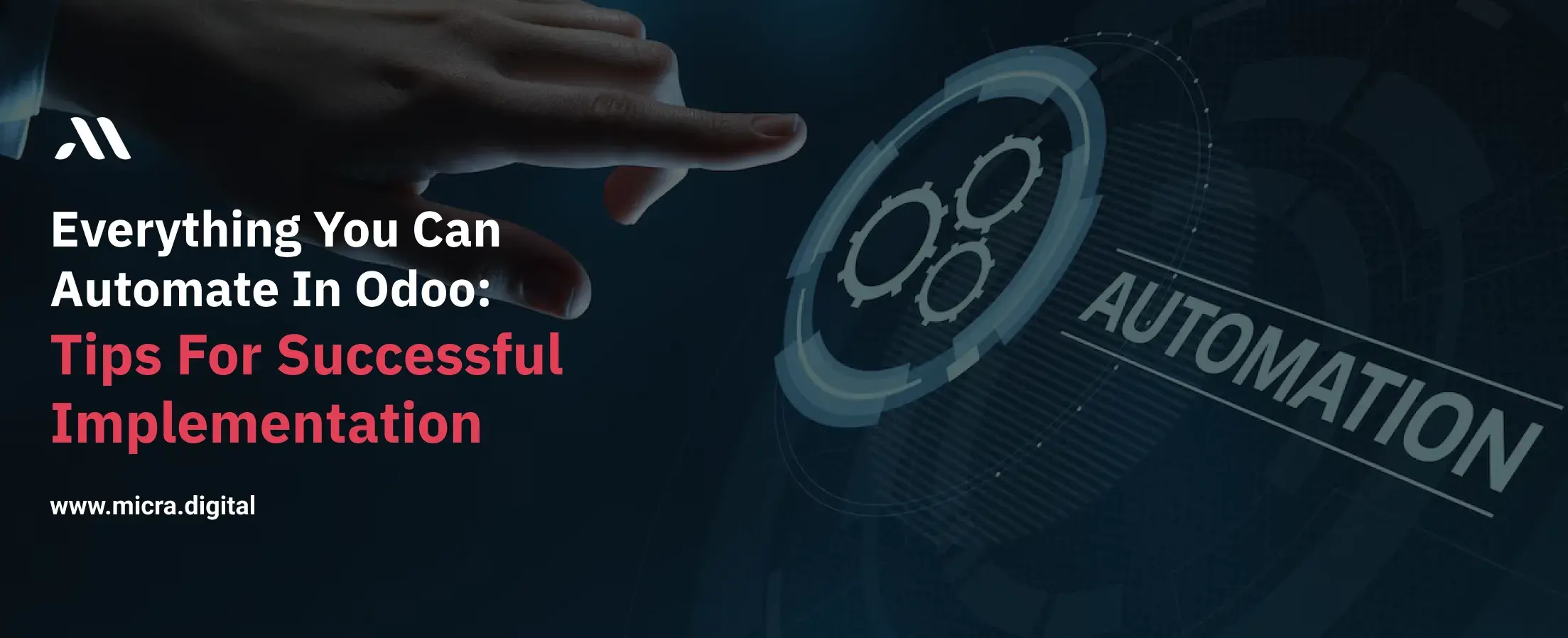
Over the past decade, Odoo ERP has evolved from a basic accounting tool into a comprehensive enterprise resource planning system capable of automating nearly every business task. From manufacturing workflows to restaurant orders, retail stock management to educational scheduling, and healthcare tracking, automation in Odoo helps organizations save time, reduce errors, and focus on what matters most.
This guide highlights the key automation areas in Odoo, actionable tips for implementation, relevant statistics, and answers to frequently asked questions. Whether you're a manufacturer, restaurateur, educator, retailer, or healthcare provider, you’ll discover practical ways to adopt auto-driven efficiency.
Also Read: Top Odoo Security Practices Every Business Should Know
Automation isn't just about robots on a factory floor. In the context of an ERP system like Odoo, it's about making your digital processes work for you, reducing manual effort, and minimizing human error. Here's why embracing Odoo for automation is crucial:
Companies typically experience a 20-25% reduction in operational costs after successfully implementing an ERP system. This includes savings from automating tasks within Odoo. (Source: Aberdeen)
The right Odoo implementation can transform your business from a collection of isolated departments into a synchronized, high-performance machine.
.jpg)
Odoo's strength lies in its integrated modularity. Each application can be automated individually, and critically, these automations can work together across modules, creating powerful end-to-end workflows within your ERP system.
The sales process, from lead generation to order fulfillment, is ripe for automation.
What you can automate: Automatically assign new website leads to specific sales teams or individuals based on criteria (e.g., region, product interest). Set up automated follow-up emails for leads that haven't responded.
Industry Example: A retail business can automatically capture website inquiries for specific product categories and route them to specialist sales reps in their Odoo CRM.
What you can automate: Generate professional quotes from templates with a few clicks. Convert confirmed quotes directly into sales orders in Odoo. Send automated order confirmations to customers.
Industry Example: A manufacturing business can auto-generate complex product quotes based on bill of materials (BOM) data stored in Odoo, drastically speeding up their sales cycle.
What you can automate: Set up automated reminders for sales reps to follow up on open opportunities. Create automated tasks when a deal reaches a certain stage (e.g., "prepare contract").
Industry Example: A restaurant can use Odoo to automatically send happy birthday emails with a discount code to customers in their CRM database.
For businesses dealing with physical goods, these automations are game-changers.
What you can automate: Automatically generate purchase orders to suppliers when inventory levels drop below a predefined minimum stock level in Odoo.
Industry Example: A retail chain manages stock across multiple locations. Odoo can automatically trigger transfers or purchase orders to suppliers based on sales velocity and stock levels, ensuring shelves are always stocked.
What you can automate: Based on confirmed sales orders, Odoo can automatically create manufacturing orders and associated work orders, reserving necessary raw materials.
Industry Example: A manufacturing plant uses Odoo to connect sales directly to production. When a customer order comes in, the ERP system automatically schedules the production, assigns it to machines, and updates raw material needs.
What you can automate: Use barcode scanners to automate inventory movements (receipts, deliveries, internal transfers) in Odoo. Automatically track products by lot or serial number for traceability.
Benefit: Reduces manual data entry errors and speeds up warehouse operations significantly.
Automation can reduce manual errors by up to 90%, leading to increased data accuracy and fewer costly mistakes within an ERP system like Odoo. (Source: McKinsey)
Financial processes are often repetitive and detail-heavy, making them ideal for Odoo automation.
What you can automate: Automatically generate customer invoices from confirmed sales orders or delivered services. Send automated payment reminders for overdue invoices. Reconcile bank statements automatically by matching transactions.
Industry Example: An educational institution can set up Odoo to automatically generate and send tuition invoices to students based on their enrollment status and payment schedules.
What you can automate: Allow employees to submit expenses via the Odoo mobile app, automatically route them for approval, and integrate directly with accounting for reimbursement.
Benefit: Reduces manual expense report processing time and potential errors.
What you can automate: Schedule automated generation and delivery of financial reports (e.g., P&L, balance sheet) to key stakeholders at predefined intervals.
Benefit: Provides timely insights without manual effort from your ERP solution.
For service-based businesses or project-driven operations, Odoo can automate many aspects.
What you can automate: Automatically create project tasks from confirmed sales orders for services. Assign tasks to specific team members based on their roles or workload in Odoo.
Industry Example: A consulting firm uses Odoo to automatically create a new project and assign initial setup tasks whenever a new client contract is signed.
What you can automate: Integrate timesheet entries directly with project progress and customer billing in Odoo, automating the creation of service invoices.
Benefit: Ensures accurate billing and reduces administrative overhead.
For businesses with an online presence, Odoo can automate many customer interactions.
What you can automate: Automatically process online orders received through your Odoo website, creating sales orders, deducting inventory, and triggering delivery orders.
Industry Example: An e-commerce business uses Odoo to instantly process online sales, update stock, and notify the warehouse for shipping, providing a smooth customer experience.
What you can automate: Send automated order confirmations, shipping updates, and post-purchase follow-up emails from Odoo.
Benefit: Keeps customers informed and enhances satisfaction.
Even HR processes can be streamlined with Odoo.
What you can automate: Allow employees to request leave via Odoo, automatically route requests for manager approval, and update leave balances.
Benefit: Reduces paperwork and simplifies the leave request process.
What you can automate: Trigger automated tasks for new employee onboarding (e.g., IT setup, welcome email, training assignments) in Odoo.
Benefit: Ensures a consistent and efficient onboarding experience.
Automation in Odoo transforms your operations from how you handle sales, purchases, manufacturing, and HR to how you serve customers and plan resources. By following best practices, staying focused, and testing regularly, you can unlock cost savings, speed, and growth. Start small, aim high, and use Odoo’s powerful tools to drive business efficiency; you’ll wonder how you managed without it.
Let Micra Digital help you identify high-impact workflows, implement efficient automations, and scale your results.
Yes, just disable scheduled actions or delete server actions to turn off automations.
If poorly written, yes. Always test performance impact before scaling.
Tasks that are repetitive, rule-based, high-volume, and prone to human error are ideal candidates for Odoo automation.
Yes, as long as you follow Odoo's best practices and don’t modify core files.
Yes, absolutely! Odoo is highly scalable, and its automation features can benefit businesses of all sizes.
Let Odoo take your business to the next level!
Contact us and take the next step!
Follow Our Adventures!

Ready to launch your next project?
Company
Copyright © 2020. micra.digital. All rights reserved.