- Company
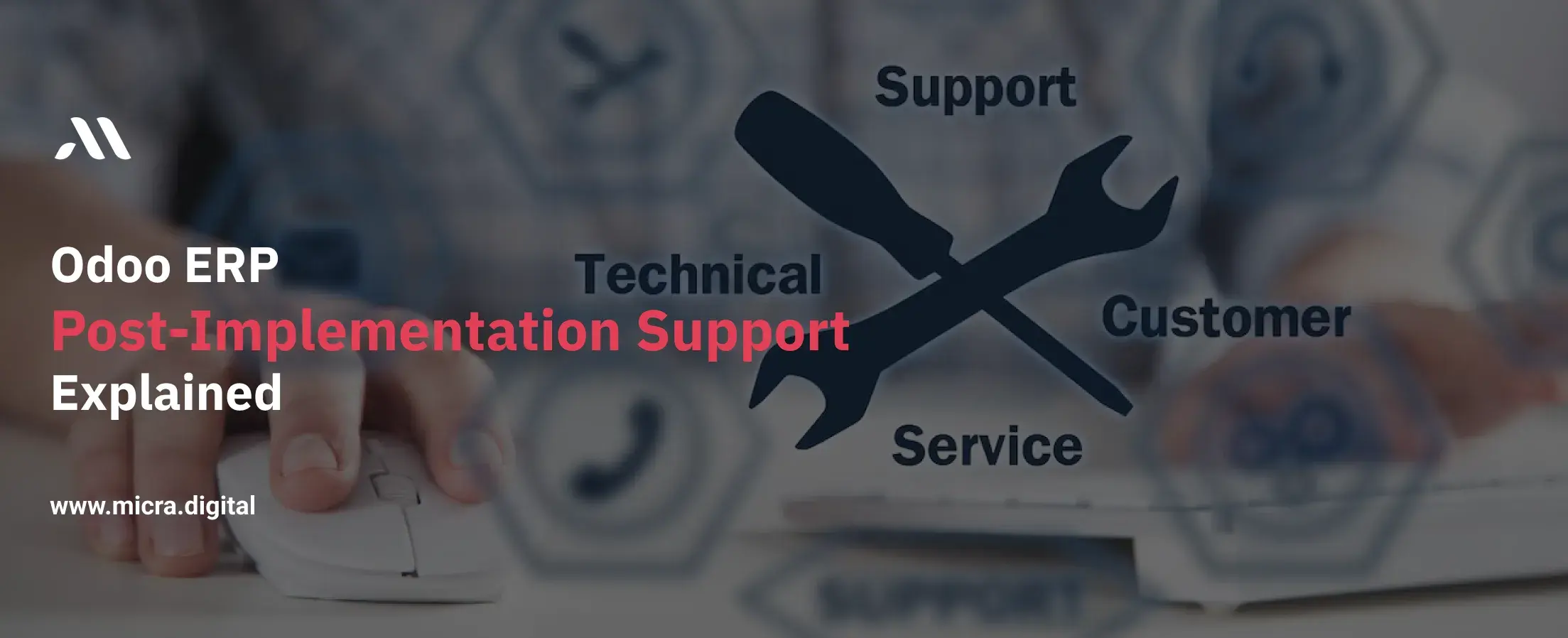
For businesses deciding to implement an Enterprise Resource Planning (ERP) system, like Odoo is a significant strategic move. It promises a future of integrated operations, improved efficiency, and better decision-making.
The journey often involves detailed planning, data migration, and comprehensive training, all culminating in the exciting "go-live" moment when your new ERP system becomes operational. However, many business owners make a common mistake: assuming that once the ERP software is live, the work is done.
The truth is, going live with your Odoo ERP is not the finish line; it's merely the end of the beginning. Just like a well-oiled machine needs regular maintenance, a powerful ERP system requires ongoing care, optimization, and support to continue delivering maximum value.
This is where Odoo ERP post-implementation support comes into play. It's the critical phase that ensures your initial investment in Odoo ERP translates into long-term success, helping your business adapt, grow, and thrive in a constantly evolving market.
This detailed blog will explain the multifaceted nature of Odoo ERP post-implementation support, highlighting why it's a non-negotiable component for any business seeking to fully leverage their enterprise resource planning system.
Also Read: How Odoo ERP Optimizes Production in the Foundry Industry.
Investing in Odoo ERP post-implementation support is not an added cost; it's an essential part of maximizing your ERP solution's return on investment. Here's why:
Initial usage often uncovers minor bugs, configuration issues, or user errors. Post-implementation support provides immediate technical assistance to resolve these, keeping your business running smoothly.
Continuous training, Q&A sessions, and accessible support channels help users become more comfortable and proficient with the ERP software, leading to higher adoption rates and better utilization of the ERP system.
Businesses are dynamic. New products, services, market conditions, or internal processes might require adjustments or new functionalities within your Odoo ERP. Post-implementation support allows for this evolution.
Regular updates from Odoo (both community and enterprise versions) often include new features and crucial security patches. Support ensures these are applied correctly and seamlessly, protecting your data and keeping your ERP solution current.
Over time, an ERP system can accumulate data, which might impact performance. Support can help with database optimization, server maintenance (for self-hosted solutions), and overall system health checks.
A robust support plan includes strategies for data backup and disaster recovery, safeguarding your critical business information within the ERP system.
An ERP system like Odoo is constantly evolving. Post-implementation support helps you identify and implement new modules or features that can further enhance your operations and give you a competitive edge. It's about ensuring your Odoo solution remains the best ERP system for your needs.
.jpg)
After implementation, users may require additional training to fully utilize the system's features. Ongoing support helps address user queries and ensures efficient system usage.
Regular maintenance and updates are essential to keep the ERP system running smoothly. This includes applying patches, updating modules, and ensuring compatibility with other systems.
As business needs evolve, the ERP system may require customization or the addition of new features. Post-implementation support facilitates these enhancements to align the system with current business processes.
Monitoring the system's performance helps identify and resolve issues promptly, ensuring optimal system functionality.
Effective data management, including data backups and recovery, is crucial to prevent data loss and ensure business continuity.
A study by Panorama Consulting Solutions (a leading ERP consulting firm) found that 50% of ERP implementations fail to deliver expected results, with a significant reason being inadequate post-go-live support and user adoption issues.
Post-implementation support is a vital component of the ERP lifecycle. It ensures that the system continues to meet business requirements, adapts to changes, and operates efficiently. By investing in comprehensive support services, businesses can maximize the return on their ERP investment and maintain a competitive edge.
At Micra Digital, we specialize in providing complete Odoo ERP support services customized to your business needs. Our team of experts is committed to ensuring your ERP system operates at peak performance.
Regular updates are recommended to ensure system security and access to new features. The frequency may depend on the specific modules and customizations in use.
Provide a clear support process for users to report issues. Ensure that support staff are available to assist and that training resources are accessible.
Yes, post-implementation support includes the ability to customize and enhance the system to meet evolving business needs.
Implement regular data backups, access controls, and security protocols. Engage with your ERP support provider to ensure best practices are followed.
While not mandatory, having a dedicated support team or partner can significantly improve response times and system reliability.
Let Odoo take your business to the next level!
Contact us and take the next step!
Follow Our Adventures!

Ready to launch your next project?

Company
Copyright © 2020. micra.digital. All rights reserved.