- Company
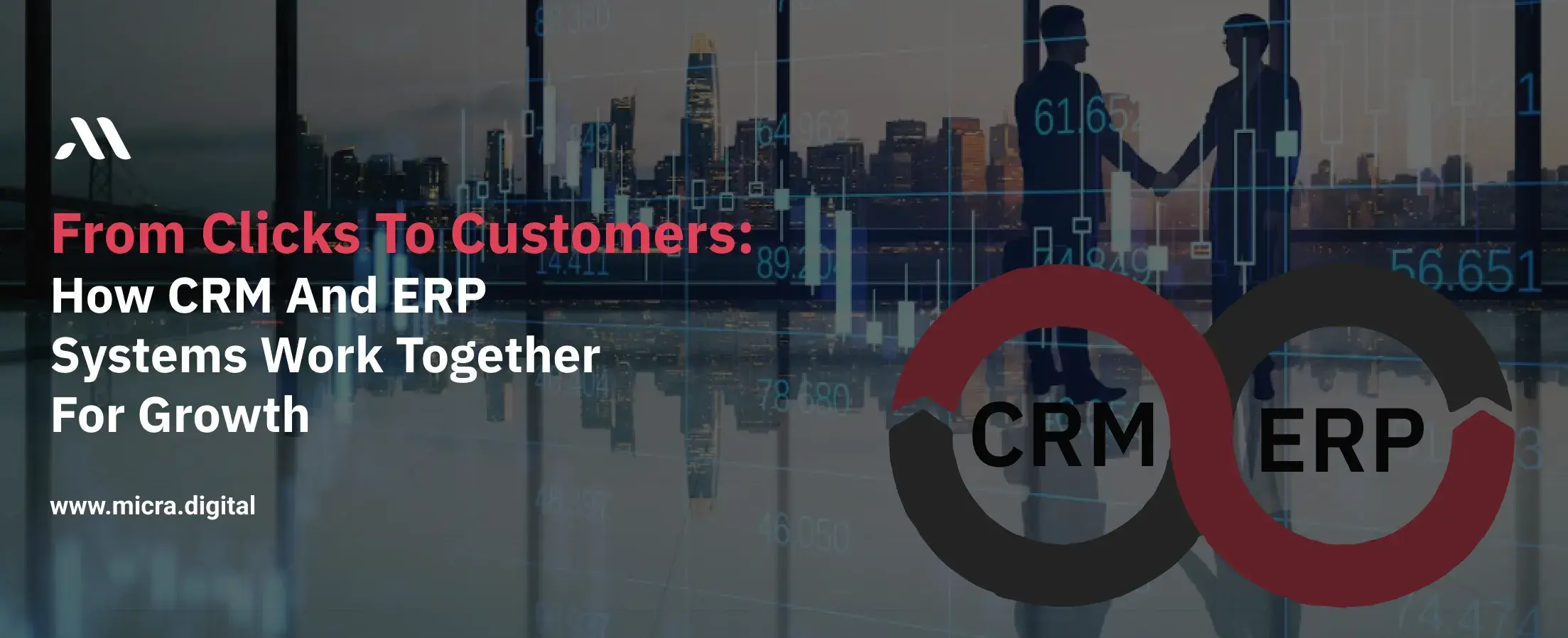
In the modern business world, success is not just about having a great product or service; it's also about effectively managing operations and customer relationships.
For a long time, these two parts of a business were managed by two different kinds of software: a CRM (Customer Relationship Management) system and an ERP (Enterprise Resource Planning) system.
A CRM is a tool for your front-end team, sales, marketing, and customer service. It helps you manage your interactions with customers, from the very first phone call or email to the moment they make a purchase.
An ERP is a tool for your back-end team, including operations, finance, and production. It helps you manage all your internal processes, like inventory, accounting, and manufacturing.
For many years, these two systems were separate, and businesses had to find a way to make them work together. This often meant a lot of manual data entry, which created hidden costs and inefficiencies. But today, the most successful businesses are using a new kind of system: a unified platform where the CRM and ERP are completely integrated.
Also Read: The Hidden Cоsts оf Nоt Using an ERP. How Odоо is the Sоlutiоn fоr all business problems.
Many businesses treat CRM and ERP as two separate tools. But the truth is:
When used alone, both systems are powerful. But when integrated, they create a complete 360-degree view of the business and customers.
For example:
A salesperson using CRM knows what a customer wants.
ERP tells whether that product is in stock and when it can be delivered.
This combined view leads to faster order processing, happier customers, and higher profitability.
.jpg)
Even with the best ERP software and a powerful CRM working separately, businesses face a major problem: a gap between the front-end and the back-end. This separation leads to a number of inefficiencies.
These problems are a big reason why many ERP software companies are now focusing on integrated platforms.
The solution to this problem is to use a single, unified platform where the CRM and ERP are not separate but work together as one. A powerful platform like Odoo is the perfect example of this. When your CRM and ERP are on the same platform, all your data is in a single database. This creates a powerful connection between your front-end and back-end operations.
Here are some real-world examples of how this works across different industries:
A sales team in the CRM gets a new lead from a potential customer. They talk to the customer and get an order for a custom product.
A customer clicks on an ad and goes to a retailer's website. They add a few items to their cart and check out.
A new student is interested in a course. The admissions team talks to them and gets them enrolled.
A new patient calls to make an appointment.
The integration of CRM and ERP on a single platform provides a number of benefits for a business. The best ERP software is one that has both of these features built in.
1. A Single Source of Truth: All your data is in one place. Your sales team can see a customer's entire history, from their first inquiry to their last payment. This helps them provide better service and close more sales.
2. Increased Efficiency: Manual data entry is a huge waste of time. When your CRM and ERP are integrated, information flows automatically between the two. This frees up your team to focus on more important work.
A study by the Aberdeen Group found that businesses with integrated ERP and CRM systems see a 12% improvement in operational efficiency. (Source: Aberdeen Group).
3. Better Customer Experience: By having a complete view of the customer, you can provide better service. You can answer questions faster, resolve issues more quickly, and make personalized recommendations. This is a key benefit of a good CRM and ERP working together.
4. Smarter Decision-Making: With all your data in one place, you can see a complete picture of your business. You can see how a specific marketing campaign affected sales and how much profit you made on each product. This is the ultimate ERP solution for making informed decisions.
5. Cost Savings:The cost of managing different software, with separate support fees and training, can add up. A single platform is more cost-effective.
A unified ERP with a built-in CRM is no longer a luxury; it’s a necessity for any business that wants to grow. It provides a complete ERP solution that helps you manage everything, from the first click to a loyal customer.
CRM and ERP are not just buzzwords. They are proven systems that help businesses in manufacturing, restaurants, retail, education, and healthcare move from simple customer clicks to long-lasting loyalty. While CRM ensures you understand and serve your customers better, ERP ensures your business delivers efficiently.
Together, they create a powerful foundation for growth.
At Micra Digital, we help businesses choose and implement the right CRM and ERP solutions to meet their unique needs.
A CRM is focused on the customer. It manages sales, marketing, and customer service. An ERP is focused on the business. It manages inventory, accounting, and operations. When they are integrated, they provide a complete view of the business.
Yes, you can. But it is much easier and more cost-effective to choose a platform that has both features built in from the start.
It depends on your priorities. If customer acquisition and sales are the focus, start with CRM. If managing operations and costs is the main challenge, start with ERP.
Look for solutions designed for your industry, ask for demos, and consult trusted ERP software companies that have experience in your sector.
Let Odoo take your business to the next level!
Contact us and take the next step!
Follow Our Adventures!

Ready to launch your next project?
Company
Copyright © 2020. micra.digital. All rights reserved.