- Company
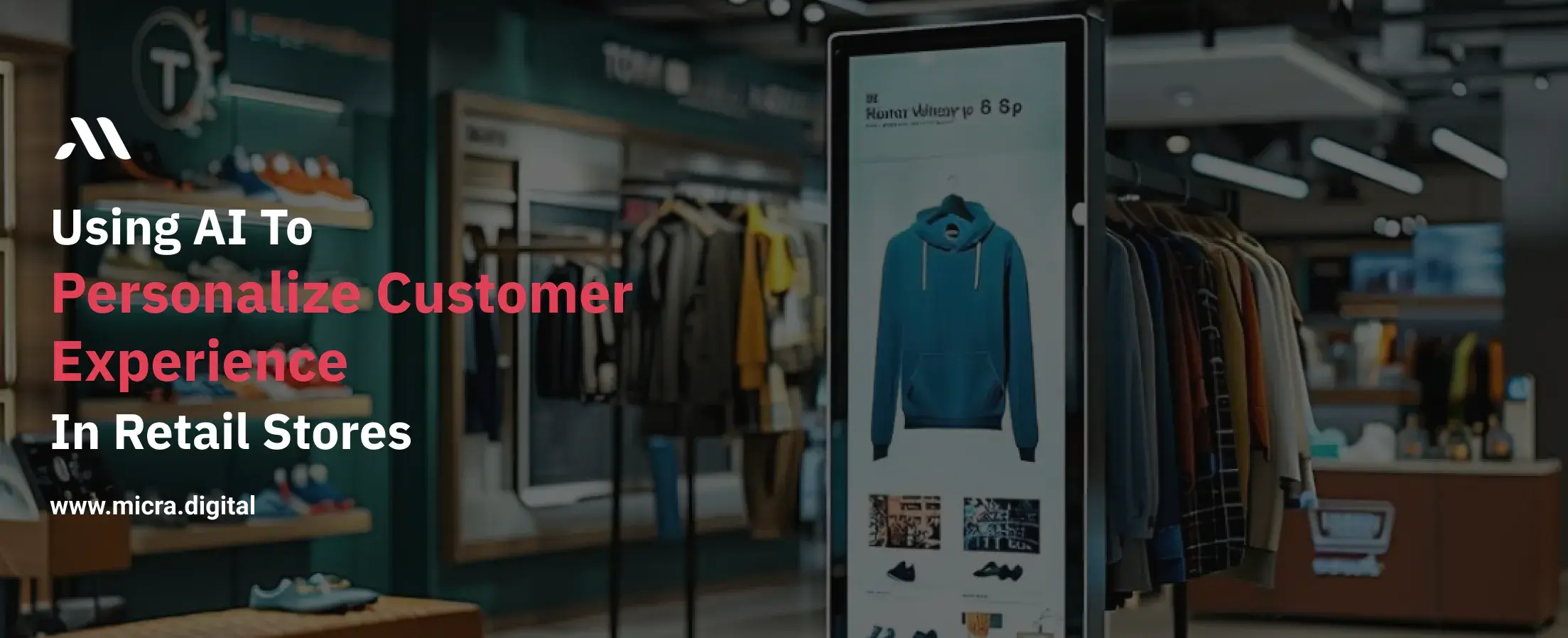
In the retail world, providing a great product is just the beginning. Customers now expect a personalized, unique experience every time they interact with a brand. They want to feel seen, understood, and valued, whether they're shopping online or in a physical store.
This is where Artificial Intelligence (AI) is changing the game. By using AI, retailers can gather and analyze vast amounts of data to create truly individual shopping journeys for each customer.
However, modern platforms like Odoo are making it more accessible than ever. By integrating AI capabilities into a core ERP system, businesses can move beyond basic automation and start making intelligent, data-driven decisions that directly improve the customer experience.
This detailed guide will explore how AI can be used to personalize the customer experience in retail stores. We will look at how an Odoo ERP system acts as the central hub for this transformation, bringing together all the necessary data to make personalization a reality.
Also Read: Can Odoo Replace All Your Software Tools? Here’s What You Need to Know
Think of Odoo as the “central brain” for your store. It’s an ERP with apps for POS, Inventory, CRM, Email/SMS marketing, Website & eCommerce, Accounting, and more. With these pieces connected, you can apply AI on top of unified data so personalization becomes actionable in-store and online.
What this looks like in real life:
Why this matters: Without a central ERP, personalization is guesswork. With Odoo, data from POS, web, stock, and service tickets sits in one place, so AI features and rules have real context.
.png)
AI-driven personalization can take many forms, both in the physical store and in the digital world. Let’s look at some key applications.
This is one of the most common and effective uses of AI in retail. By analyzing a customer’s past purchases and browsing history, AI algorithms can predict what they might be interested in next.
This approach is extremely effective. For example, it's estimated that 35% of Amazon's revenue comes from its AI-based product recommendations. (Source: McKinsey). This shows the power of personalization.
AI can analyze market trends, competitor pricing, and a customer's purchasing behavior to offer the right price at the right time.
Chatbots and virtual assistants can provide 24/7 customer support, answering questions, providing product information, and even helping with orders.
The future of retail is not just online. AI can also enhance the experience in physical stores.
This is a great example of how the right ERP software can help you bridge the gap between online and offline shopping.
Odoo gives you connected data; AI helps with predictions and next-best actions:
Industry sources expect these AI uses to expand in new Odoo releases (e.g., action suggestions, upgraded recommendations)
Personalization lives or dies on data quality and timing. A fragmented stack makes both difficult. A single ERP like Odoo helps you:
1. Know the customer: purchase history, service issues, returns, preferences, one record.
2. Act in the moment: show the right message at checkout or on the product page.
3. Measure the effect: see lift in AOV, repeat rate, and gross margin from one dashboard.
This lines up with broader research: brands using AI to automate tasks and turn data into insights are better positioned to meet rising expectations.
The retail industry is at a crossroads. Businesses can either stick with old, generic approaches or embrace new technologies to create more personalized, engaging customer experiences. AI, when combined with a powerful ERP platform like Odoo, provides the tools to do just that. It allows you to move from a world of disconnected systems to a single, intelligent, and customer-focused operation.
Ready to make personalization practical, not painful?
Micra Digital sets up Odoo as your retail ERP, connects your POS and web store, and launches AI-assisted journeys that give real results.
No. Start with built-in tools like Odoo CRM, predictive lead scoring, and marketplace recommendation apps. As you grow, you can add advanced models or external tools.
Not if you keep it useful and transparent. Let customers set preferences and frequency. Focus on help over hype.
The Odoo ERP system is an all-in-one suite. It collects data from every touchpoint, including your POS, website, CRM, and marketing emails.
No. Odoo was built to help small and mid-size retailers use an ERP to run modern playbooks without an army of tools.
The best first step is to get all your data in one place. This means implementing a unified platform like an Odoo ERP system.
Let Odoo take your business to the next level!
Contact us and take the next step!
Follow Our Adventures!

Ready to launch your next project?
Company
Copyright © 2020. micra.digital. All rights reserved.