- Company
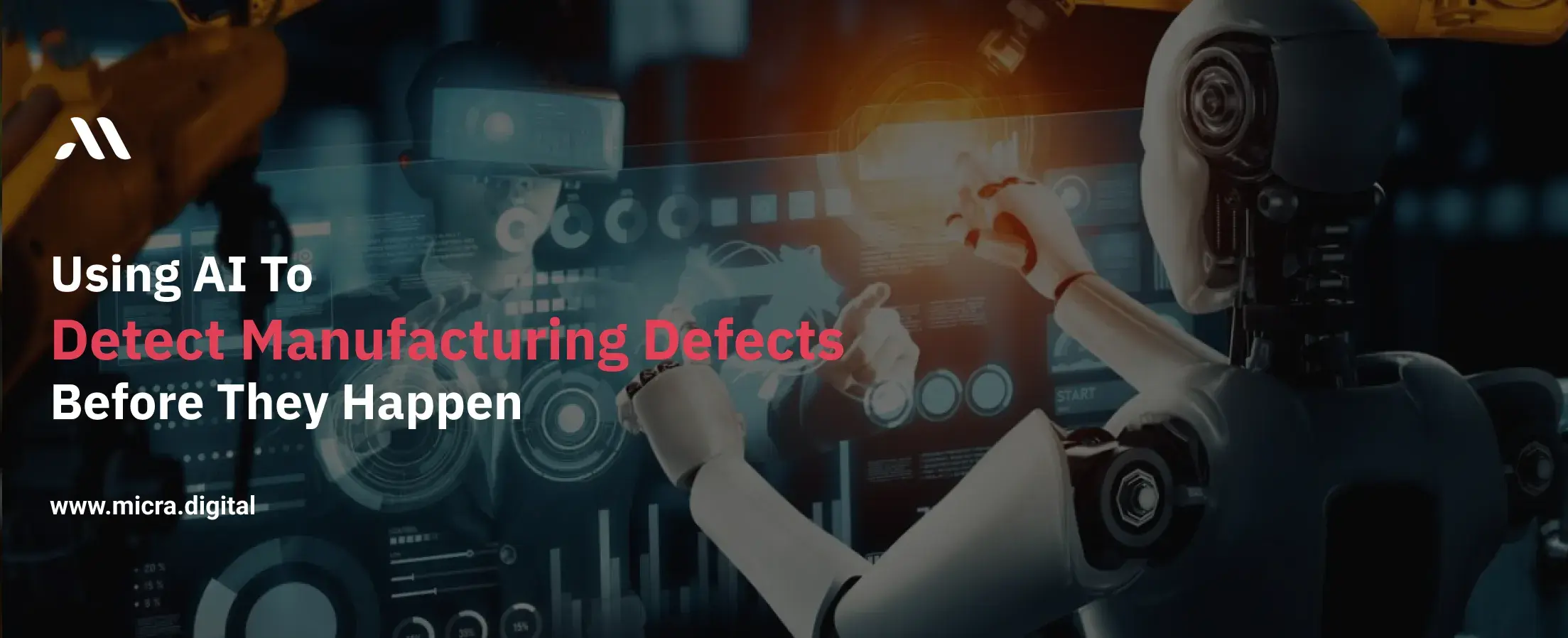
In the manufacturing industry, product quality is everything. A single defective item can lead to costly recalls, wasted materials, and damage to a brand's reputation. For years, quality control has relied on a mix of manual inspection, where people visually check products, and traditional automation, which can only catch obvious flaws.
But in the modern era, a new technology is changing the game: AI. The use of AI in manufacturing is moving from just catching defects to predicting and preventing them.
For business owners in manufacturing, as well as those in other industries like retail, healthcare, and beyond, the idea of using AI might seem complex or expensive.
However, with the right approach and a solid foundation, artificial intelligence is becoming an accessible and powerful tool for improving quality and efficiency. A modern ERP system is the key to making this possible.
This detailed guide will explore how AI and ML (Machine Learning) are being used to detect and prevent manufacturing defects.
Also Read: AI-Powered Menu Optimization for Restaurants: Sell More of What Customers Love
Traditional quality control methods have served manufacturers for decades, but they have some limitations:
This reactive approach is a major problem for profitability and efficiency. For manufacturers, a defective product is a direct loss, and if it makes it to a customer, the cost can be even higher. This is a clear area where AI in business offers a better way.
.jpg)
AI and ML transform quality control from a reactive process into a proactive one. They use a combination of technologies to analyze data and make intelligent decisions.
This is one of the most common applications of AI for defect detection. Instead of a human eye, a high-resolution camera takes pictures of a product as it moves down the assembly line. An AI model, trained on thousands of images of both good and defective products, can analyze these pictures in real time to spot even the smallest flaws.
According to a study by the National Institute of Standards and Technology (NIST), AI-powered visual inspection systems can improve defect detection rates by up to 90% and reduce inspection time by 50%. (Source: NIST).
This is where AI moves beyond simple detection and into prevention. Anomaly detection is the process of identifying unusual patterns in data that might signal a problem. An AI model can analyze data from a variety of sources, like a machine's temperature, vibration, and energy consumption, to predict when a defect is likely to occur.
This is a key part of AI and ML for manufacturers. By catching a problem before it creates a defect, a business can save a huge amount of money in wasted materials and downtime.
For a manufacturer to get the full benefits of AI-powered quality control, all of its data needs to be in one place. This is where an ERP system comes in. Think of an ERP as the central nervous system of your business. It connects all the different parts of your operation, from the shop floor to the warehouse to the accounting department.
A modern ERP solution like Odoo is perfectly suited for this. Here’s how an Odoo ERP provides the foundation for an AI-driven approach:
By connecting all of this data, a modern ERP allows AI tools to provide truly useful insights and take automated action. An Odoo ERP system is a complete business management platform that provides the data foundation that AI needs to do its job. Many ERP software companies are now focusing on these integrated solutions.
Utilizing AI for quality control offers significant benefits for any business, particularly for manufacturing owners.
1. Reduced Waste and Cost: By catching defects early, or even preventing them, you save money on materials, labor, and energy. A study by the American Society for Quality (ASQ) found that the cost of poor quality can be as high as 15-20% of sales. AI can help reduce that.
2. Improved Product Quality:AI is more accurate and consistent than a human inspector. This means your products will have fewer flaws, which improves customer satisfaction and builds brand loyalty.
3. Increased Efficiency:An AI system can work 24/7 without getting tired. This allows you to improve your production rates and get more products out the door. The AI can also automate tasks, freeing up your team to focus on more complex work.
4. Better Data and Insights:AI can analyze data to find the root cause of a defect. It can see a correlation between a machine's temperature and a specific type of flaw, giving you the information you need to fix the problem permanently.
5. Competitive Advantage: As more businesses adopt AI, those who are not using it will be at a disadvantage. Adopting an integrated ERP solution with AI capabilities gives you an edge over your competition. This is what makes it the best ERP software.
According to a report by Deloitte, 83% of manufacturing executives believe that AI will be a key driver of change in their industry. This shows the growing importance of AI in the manufacturing world. (Source: Deloitte).
The manufacturing industry is at a crossroads. Businesses can either stick with old, reactive approaches or embrace new technologies to create more efficient and intelligent operations. AI, when combined with a powerful ERP platform like Odoo, provides the tools to do just that. It allows you to move from a world of disconnected systems to a single, intelligent, and proactive operation.
Don’t wait for problems to happen. With Micra Digital, you can use AI to detect issues early and keep your business running smoothly.
AI (Artificial Intelligence) in manufacturing means using smart computer systems that can learn from data and make decisions. It helps in tasks like detecting defects, predicting machine failures, and improving production quality.
No. While large companies have been using AI for years, the increasing availability of affordable software and integrated solutions like Odoo means that small and medium-sized manufacturers can also use AI for quality control.
No. AI is a tool to empower human employees, not to replace them. It frees up your team from repetitive tasks so they can focus on more strategic work.
AI and ML (Machine Learning) models analyze images, sensor data, or production records in real time. If they spot something unusual, like a crack, misalignment, or faulty product, they immediately flag it before it reaches the customer.
Let Odoo take your business to the next level!
Contact us and take the next step!
Follow Our Adventures!

Ready to launch your next project?

Company
Copyright © 2020. micra.digital. All rights reserved.