- Company
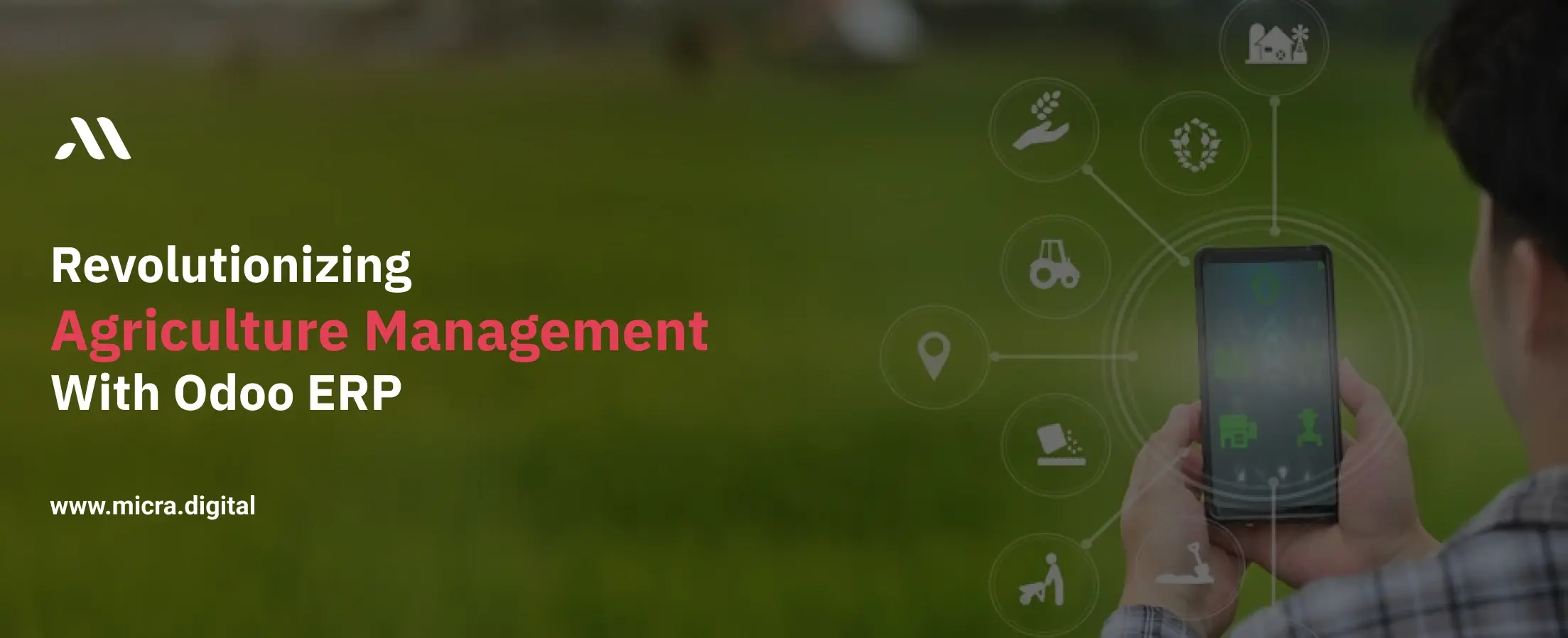
Agriculture is the foundation of the global economy, but managing agricultural operations efficiently can be daunting. From planting and harvesting to inventory management and sales, every aspect requires careful coordination.
Enter Odoo ERP, a complete solution designed to simplify agricultural management and help farmers and agribusinesses thrive.
In this blog, we’ll explore how Odoo ERP can transform the agriculture industry, making operations more efficient, organized, and profitable.
Agriculture faces unique challenges that require innovative solutions:
1. Seasonal Production:
Farmers must manage planting, harvesting, and distribution within tight timeframes.
2. Inventory Management:
Perishable goods demand precise tracking and storage to avoid losses.
3. Labor Management:
Coordinating field workers and equipment efficiently is crucial for success.
4. Market Fluctuations:
Pricing and demand can change rapidly, making financial planning difficult.
5. Regulatory Requirements:
Agricultural businesses must comply with safety, quality, and environmental standards.
These challenges make it clear that an all-in-one system is essential for modern agricultural operations.
Odoo ERP offers an integrated platform that combines multiple tools to address the complexities of agricultural management.
1. Efficient Farm Management
2. Real-Time Inventory Tracking
3. Financial Management
4. Sales and Distribution
5. Workforce Management
6. Compliance and Reporting
1. Modular Approach:
Choose only the modules you need, such as inventory, accounting, or sales.
2. Customizable Dashboard:
Access real-time data about crops, inventory, and finances in one place.
3. Mobile Access:
Manage operations on the go with Odoo’s mobile app.
4. Integration Capability:
Connect with existing tools like GPS tracking or IoT devices for farm machinery.
5. Scalability:
Grow your system as your farm expands without worrying about limitations.
1. Increased Productivity:
Streamlined processes save time and reduce labor costs.
2.Reduced Waste:
Better inventory and resource management minimize losses.
3. Improved Profitability:
Data-driven decisions help maximize yields and revenue.
4. Enhanced Customer Trust:
Transparency in traceability and quality assurance builds consumer confidence.
5. Ease of Use:
A user-friendly interface ensures that even non-technical users can manage the system effectively.
Scenario
A mid-sized agricultural company was struggling with inventory tracking, labor allocation, and compliance reporting.
Solution
They implemented Odoo ERP to manage their operations. The platform allowed them to:
Results
The agriculture industry is evolving rapidly, and businesses need modern tools to stay competitive. Odoo ERP offers an all-in-one solution for managing everything from crop planning to distribution.
Schedule a free demo today to see how Odoo can help your farm thrive!
1. Can Odoo help manage small farms?
Yes, Odoo is scalable and works well for both small farms and large agricultural businesses. You can start with basic modules and expand as needed.
2. Does Odoo support compliance tracking?
Absolutely! Odoo provides tools for product traceability, audit-ready reports, and regulatory documentation, making compliance easy.
3. How can Odoo help with perishable goods?
Odoo tracks inventory in real-time and issues expiry alerts for perishable items, ensuring minimal waste.
4. Can Odoo integrate with farm equipment?
Yes, Odoo can integrate with IoT devices and other tools, such as GPS trackers, to monitor equipment usage and optimize farm operations.
5. Is Odoo suitable for organic farming?
Definitely! Odoo’s traceability features are ideal for organic farming, allowing you to document every step of production and meet certification requirements.
Let Odoo take your business to the next level!
Contact us and take the next step!
Follow Our Adventures!

Ready to launch your next project?

Company
Copyright © 2020. micra.digital. All rights reserved.