- Company
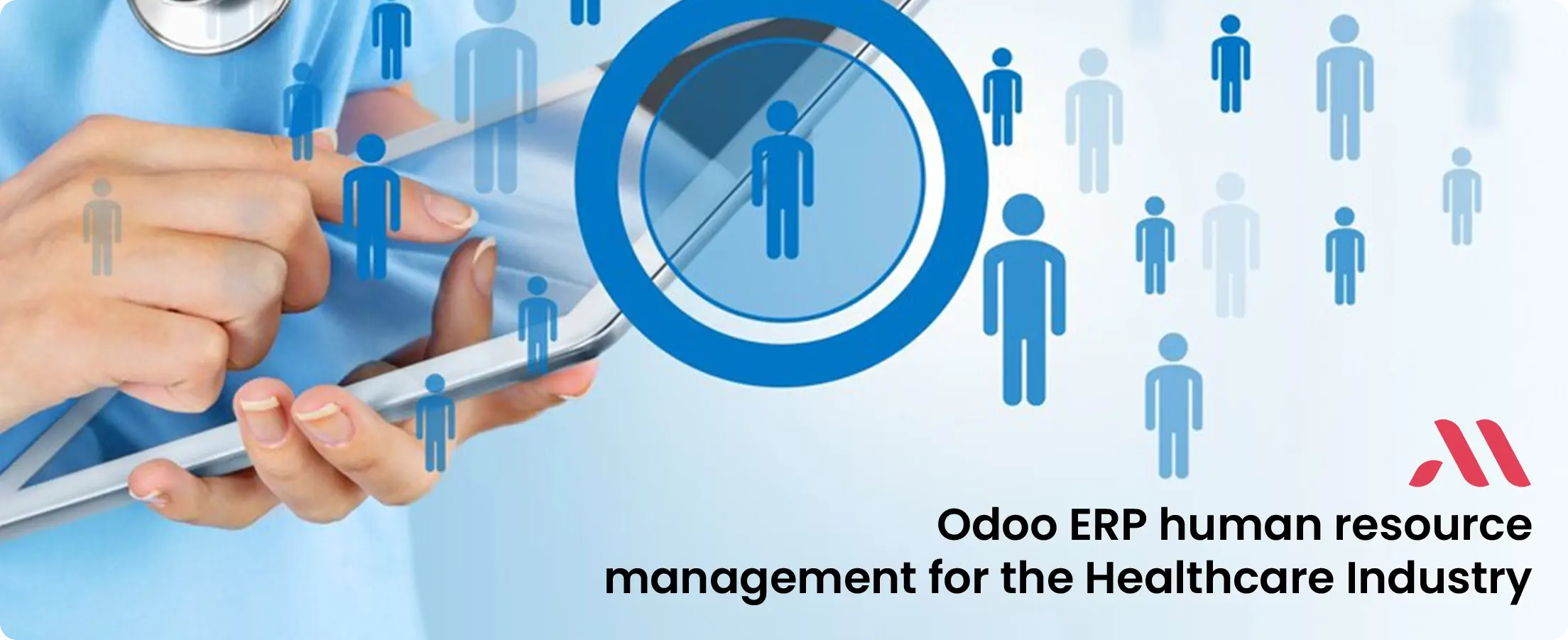
The healthcare industry faces unique challenges when it comes to managing its workforce. From staffing hospitals and clinics 24/7 to ensuring regulatory compliance and staff well-being, the role of human resource (HR) management in healthcare is complex.
To effectively manage these challenges, healthcare organizations need robust HR management systems that streamline processes and improve overall workforce efficiency.
Odoo ERP, a modular and integrated enterprise resource planning (ERP) solution, provides a comprehensive set of tools designed to simplify and optimize HR management.
In this blog, we’ll explore how Odoo ERP can revolutionize human resource management in the healthcare industry by enhancing processes such as recruitment, employee records management, attendance tracking, payroll, performance evaluation, and employee development.
Before diving into the benefits of Odoo ERP, let’s look at some common challenges faced by HR departments in healthcare:
Considering these challenges, Odoo ERP provides solutions that can help healthcare organizations manage their workforce more efficiently and effectively.
1. Recruitment and Onboarding
Healthcare organizations constantly need to hire skilled professionals to fill critical roles such as doctors, nurses, technicians, and administrative staff. Odoo’s Recruitment module simplifies the hiring process by providing end-to-end recruitment management, from posting job openings to onboarding new hires.
Use Case: A hospital can use Odoo to manage its hiring needs, from sourcing qualified doctors to processing applications for nursing positions. By automating much of the recruitment process, HR can fill vacancies faster while reducing administrative workload.
2. Employee Records Management
Maintaining accurate and up-to-date employee records is crucial in healthcare, where certifications, licenses, and continuing education requirements must be tracked meticulously. Odoo’s Employee module makes it easy to store, update, and manage employee data securely.
Use Case: A clinic can use Odoo’s Employee module to store the certification details of its medical staff, ensuring that licenses are up to date. Automated reminders notify HR when renewals are required, reducing the risk of failing to follow the rules.
3.Attendance and Shift Management
Shift management and attendance tracking are critical in healthcare, where round-the-clock care is essential. Odoo’s Attendance and Shift Management tools ensure that healthcare institutions are adequately staffed at all times.
Use Case:A hospital can use Odoo’s Shift Management tool to schedule doctors, nurses, and support staff across multiple shifts, ensuring adequate coverage during the night and on weekends. HR managers can also track attendance and leave patterns to optimize workforce planning.
4. Payroll Management
Payroll in healthcare can be complicated, with different pay structures, overtime rates, and checking requirements. Odoo’s Payroll module simplifies the process by automating salary calculations, deductions, and payments.
Use Case: A healthcare organization can use Odoo to manage payroll for its diverse workforce, ensuring that employees are paid accurately based on their hours worked, shifts, and any overtime. Integration with the Attendance module ensures that payroll is processed without manual intervention, reducing errors.
5. Performance Evaluation
In healthcare, maintaining high standards of care is essential. Odoo’s Performance module helps healthcare organizations track and evaluate employee performance, ensuring that staff meet the required standards.
Use Case: A hospital can use Odoo’s Performance module to evaluate the performance of its doctors and nurses. By tracking KPIs such as patient satisfaction, compliance with protocols, and teamwork, HR managers can identify areas for improvement and provide targeted training where necessary.
6.Training and Development
Continuous education and training are vital in healthcare, where medical advancements and regulatory requirements are constantly evolving. Odoo’s Training module helps healthcare organizations manage employee development, ensuring that staff remain up-to-date with the latest industry standards.
Use Case:A hospital can use Odoo to organize training sessions for its nursing staff on new medical equipment or procedures. The system tracks attendance, and completion rates, and issues certificates, ensuring that all staff are qualified to perform their duties safely and effectively.
Odoo ERP provides a comprehensive, scalable solution for human resource management in the healthcare industry. By automating and streamlining processes such as recruitment, attendance tracking, payroll, and performance evaluation, Odoo enables healthcare organizations to manage their workforce more efficiently and focus on delivering high-quality patient care. Whether you're a small clinic or a large hospital, Odoo’s HR tools can help you overcome the unique challenges of managing a diverse and dynamic healthcare workforce.
1.How can Odoo ERP help healthcare organizations manage complex shift schedules?
Odoo ERP's Attendance and Shift Management modules allow healthcare organizations to create, manage, and adjust complex shift schedules with ease. The system tracks employee availability, facilitates shift swaps, and ensures there is always enough staff to cover different departments.
2.Can Odoo ERP help with monitoring in healthcare HR management?
Yes, Odoo ERP helps healthcare organizations comply with regulatory requirements by tracking employee certifications, licenses, and training. The system provides automated reminders for renewals and ensures that all staff are up-to-date.
3.How does Odoo ERP simplify recruitment for healthcare positions?
Odoo's Recruitment module streamlines the hiring process by allowing healthcare HR teams to post job openings, manage applications, track candidates, and facilitate interviews. The system also automates onboarding tasks, such as document collection and induction training, ensuring that new hires are quickly and efficiently integrated into the organization.
4.Is Odoo ERP customizable for different roles in healthcare?
Yes, Odoo ERP is highly customizable and can be tailored to suit various roles within a healthcare organization. Whether you're managing doctors, nurses, technicians, or administrative staff, Odoo allows you to create custom salary structures, performance metrics, and training programs to meet the unique needs of each group.
4. How does Odoo ERP integrate payroll with attendance and leave management?
Odoo ERP integrates its Payroll module with Attendance and Leave Management systems, ensuring that payroll is calculated based on accurate data. This includes regular hours worked, overtime, and leaves taken. By automating these processes, Odoo reduces the risk of payroll errors and ensures that employees are paid accurately and on time.
Let Odoo take your business to the next level!
Contact us and take the next step!
Follow Our Adventures!

Ready to launch your next project?
Company
Copyright © 2020. micra.digital. All rights reserved.