- Company
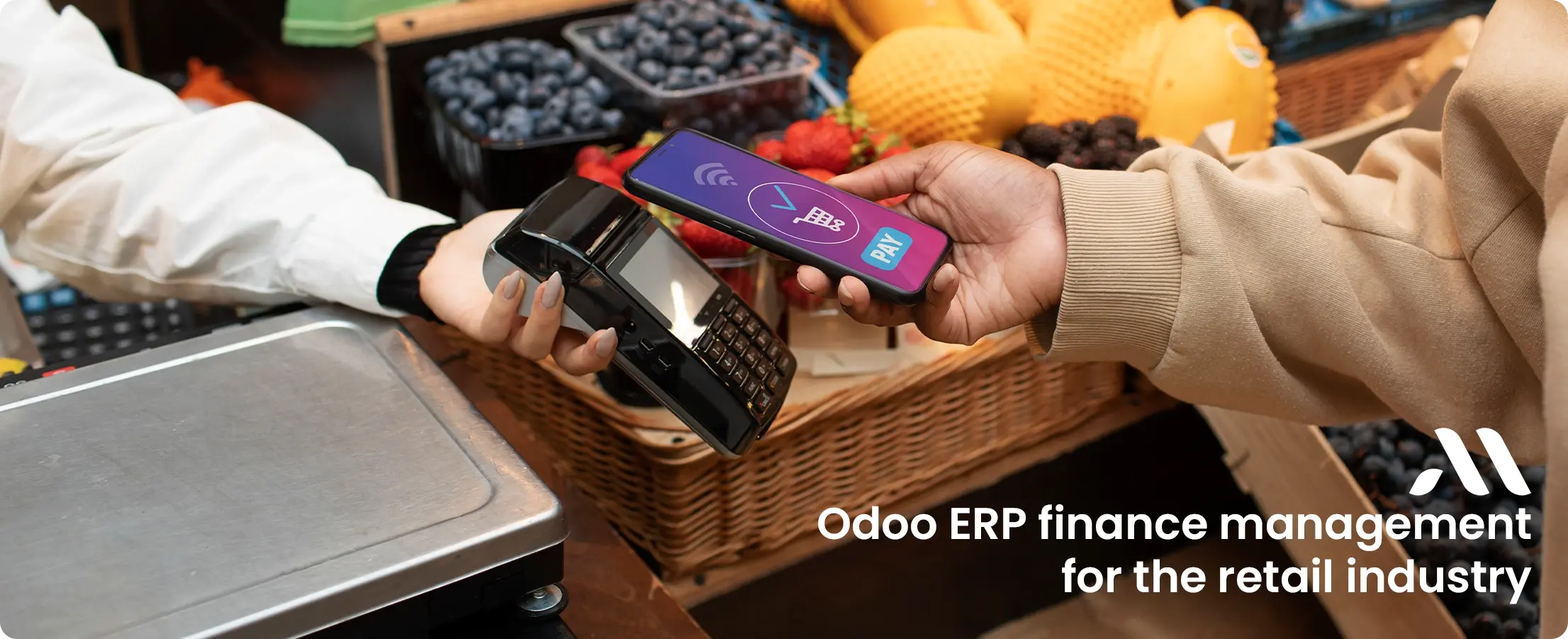
In the retail industry, where the margins can be thin, keeping track of finances, managing cash flow, and controlling costs are vital for long-term success.
As retailers juggle multiple financial responsibilities, from invoicing and payments to taxes and profitability analysis, having an efficient and integrated finance management system is critical.
Odoo ERP,is a modular software that simplifies finance management for the retail industry. Odoo ERP offers a suite of tools tailored to meet the needs of modern retailers, providing them with a powerful solution to manage every aspect of their financial operations.
The retail industry presents unique financial challenges. From managing high transaction volumes and handling multiple payment methods to maintaining real-time visibility over cash flow, inventory, and expenses, retailers need a robust system that offers full control and transparency.
Financial management in retail involves
.webp)
Odoo ERP offers a fully integrated finance management system that automates and simplifies the financial tasks that retailers face daily. From managing sales and expenses to tracking inventory costs and staying tax compliant, Odoo ERP helps retailers gain control over their finances while improving efficiency and reducing manual work. Let’s explore some of the key features of Odoo ERP for retail finance management.
1. Automated Invoicing and Payment Management
One of the most time-consuming aspects of financial management in retail is handling invoicing and payments. With Odoo ERP, the invoicing process is automated, reducing the need for manual data entry. Sales orders can be converted into invoices automatically, ensuring that customers are billed accurately and on time.
Odoo also integrates with various payment methods, allowing retailers to process payments directly through the system. Whether it’s credit card payments, bank transfers, or digital wallets, Odoo ensures seamless payment processing and reconciliation, saving time and minimizing errors.
2.Real-Time Cash Flow Monitoring
Retailers need to monitor their cash flow closely to ensure they have sufficient liquidity to cover day-to-day operations. Odoo ERP provides a cash flow management module that offers real-time visibility into incoming and outgoing funds. This includes tracking all transactions, payments, expenses, and bank account balances in one centralized dashboard.
With real-time cash flow insights, retailers can make informed decisions about spending, investments, and payment schedules to optimize their financial health.
3. Multi-Currency and Multi-Location Support
For retailers with multiple store locations or international operations, managing finances across different currencies and tax jurisdictions can be a challenge. Odoo ERP supports multi-currency transactions, enabling retailers to handle foreign currencies with ease. The system automatically converts currencies based on real-time exchange rates and ensures that financial records are updated accordingly.
In addition, Odoo allows retailers to manage their finances for multiple locations, tracking store-specific revenues, expenses, and profitability. This helps retailers gain a detailed understanding of how each store or region is performing financially.
4. Expense Management and Budgeting
Retail businesses face a wide range of expenses, from operational costs like rent and utilities to marketing and staffing. Odoo ERP’s expense management module simplifies the process of tracking and categorizing expenses. Retailers can easily record expenses, attach receipts, and categorize them by department, project, or store location.
Odoo also offers tools for budgeting, allowing retailers to set financial targets and track actual spending against their budgets. This helps businesses stay within their financial limits, control costs, and identify areas where they can save money.
5. Tax Management and Monitoring
Odoo ERP’s marketing tools are fully integrated with its CRM and sales modules, ensuring that marketing efforts are aligned with sales goals and that leads are efficiently handed off to the sales team for conversion.
Odoo also makes it easier to generate tax reports and file returns, helping businesses stay compliant with tax regulations. The system maintains a detailed record of all transactions, which can be used for audits and tax filing purposes.
6.Inventory Valuation and Accounting Integration
For retailers, inventory is a significant asset that must be accurately accounted for. Odoo ERP offers seamless integration between inventory management and accounting, ensuring that inventory values are accurately reflected in the financial statements. Retailers can choose from different inventory valuation methods, such as FIFO or LIFO, and the system automatically adjusts inventory costs based on product movements.
This integration eliminates the need for manual reconciliation between inventory and accounting systems, reducing the risk of errors and ensuring that financial records are always up to date.
7.Profitability and Financial Reporting
Odoo ERP provides reporting tools that allow retailers to analyze their financial performance in real time. The system generates reports such as profit and loss statements, balance sheets, and cash flow statements, giving retailers a clear picture of their financial health.
Retailers can also perform profitability analysis by product line, store location, or sales channel. This helps businesses identify their most profitable products and channels, allowing them to focus on areas that drive the most revenue.
By implementing Odoo ERP, retailers can benefit from several key advantages:
In the fast-paced retail industry, managing finances efficiently is crucial for maintaining profitability and staying competitive. Odoo ERP offers a solution for retail finance management, providing tools to automate invoicing, manage cash flow, handle taxes, and analyze profitability. By implementing Odoo ERP, retailers can optimize their financial operations, reduce manual work, and gain real-time insights into their business performance.
1. How does Odoo ERP help retailers manage cash flow effectively?
Odoo ERP offers a real-time cash flow management module that tracks all incoming and outgoing funds, including sales, payments, and expenses. Retailers can monitor their cash flow in real time and make informed decisions about spending, investments, and payment schedules to maintain a healthy financial position.
2. Can Odoo ERP handle multi-currency transactions?
Yes, Odoo ERP supports multi-currency transactions, making it ideal for retailers with international operations. The system automatically converts foreign currencies based on real-time exchange rates, ensuring that financial records are accurate and up to date.
3. Does Odoo ERP help with tax management?
Absolutely. Odoo ERP simplifies tax management by automatically calculating applicable taxes such as VAT and sales tax based on the retailer’s location. Retailers can generate tax reports and file returns with ease, ensuring they remain compliant with local tax regulations.
4. How does Odoo ERP integrate inventory management with accounting?
Odoo ERP seamlessly integrates inventory management with the accounting module, ensuring that inventory values are accurately reflected in financial statements. The system automatically adjusts inventory costs based on product movements and provides real-time visibility into inventory values.
5. Can Odoo ERP generate financial reports and analyze profitability?
Yes, Odoo ERP provides reporting tools that allow retailers to generate profit and loss statements, balance sheets, and cash flow reports. The system also enables profitability analysis by product line, store location, or sales channel, helping retailers make data-driven decisions to improve profitability.
Let Odoo take your business to the next level!
Contact us and take the next step!
Follow Our Adventures!

Ready to launch your next project?

Company
Copyright © 2020. micra.digital. All rights reserved.