- Company
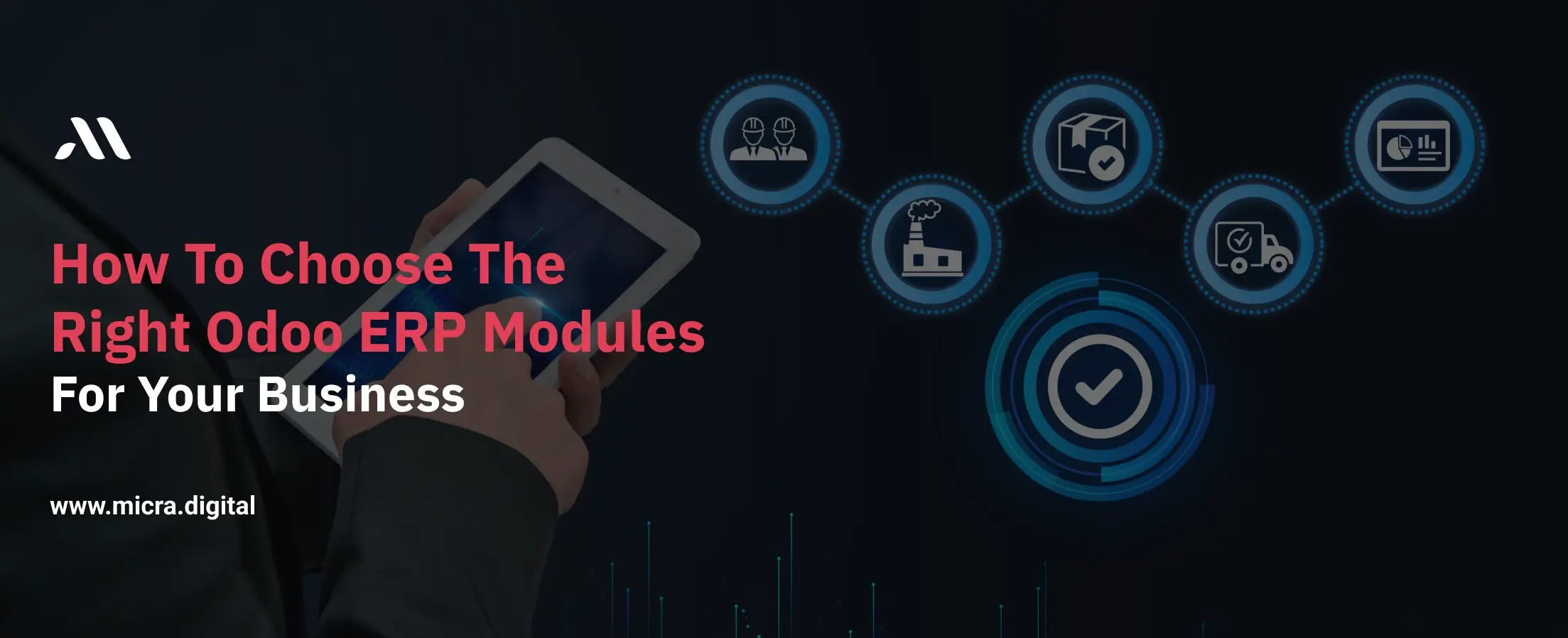
Choosing the right Odoo ERP modules is one of the most important decisions a business can make during digital transformation. Odoo is a powerful and flexible ERP platform, but its real strength lies in selecting and implementing the modules that truly fit your business needs.
Many businesses fail to see results from ERP because they either choose too many modules at once or select the wrong ones. This guide will help you understand how to choose the right Odoo ERP modules based on your industry, business size, and growth goals.
Odoo ERP is modular by design. This means you don’t need to use everything at once. You can start small and expand as your business grows.
Choosing the right modules helps you:
A professional ERP development company can guide you through this process, but understanding the basics helps you make better decisions.
.jpg)
Before selecting any Odoo ERP module, map out how your business works today.
Ask yourself:
The goal of ERP is not to change your business overnight but to fix inefficiencies and automate repetitive tasks.
Different businesses need different ERP modules. Focus on what is essential today, not what “might be useful later.”
These usually form the foundation of a successful Odoo ERP implementation.
Recommended Odoo ERP modules:
These modules help manage production planning, raw materials, machine maintenance, and cost control.
Recommended modules:
This setup helps manage stock levels, sales channels, billing, and customer data in one system.
Recommended modules:
This combination improves client tracking, service delivery, billing accuracy, and team productivity.
Recommended modules:
These modules ensure smooth order processing, stock updates, and customer engagement.
One of the most common ERP mistakes is implementing too many modules at once.
Best practice:
A phased approach reduces risk and ensures better adoption.
When choosing Odoo ERP modules, don’t focus only on features. Focus on automation opportunities.
Ask:
A good ERP development company will configure modules to automate workflows instead of just installing them.
Every business is unique. Sometimes standard modules are not enough.
You may need:
Odoo ERP supports customization, but it should be done carefully to avoid future upgrade issues. Always work with an experienced ERP development company for this.
The right Odoo ERP modules should give you:
If a module does not help you make faster or better decisions, it may not be necessary.
Your business will grow. Your ERP should grow with you.
Choose Odoo ERP modules that:
This future-ready approach saves time and money in the long run.
You may also find this helpful - Common Odoo ERP Implementation Mistakes and How to Avoid Them
Odoo ERP is not about using every module; it’s about using the right modules.
When chosen correctly, Odoo ERP can:
Start with clarity, implement smartly, and scale confidently.
At Micra Digital, we help businesses choose, implement, and customize Odoo ERP modules that truly match their operations; no unnecessary complexity, no wasted investment.
Start with 3–5 core modules based on your business needs. You can add more later as your operations grow.
Yes. Odoo ERP is modular, allowing you to add or modify modules at any time.
Not always. Many businesses can run on standard modules. Customization is needed only for unique workflows.
Basic implementations can take a few weeks. Complex setups may take a few months, depending on the scope.
An ERP development company ensures correct module selection, proper configuration, automation, and long-term scalability.
Let Odoo take your business to the next level!
Contact us and take the next step!
Follow Our Adventures!

Ready to launch your next project?
Company
Copyright © 2020. micra.digital. All rights reserved.