- Company
Employee attendance is one of the most basic yet important parts of running a business. Whether you have 10 employees or 10,000, keeping track of who comes to work, when they arrive, and when they leave is essential for payroll, productivity, and business planning.
For many years, businesses relied on paper registers, punch cards, PIN-based machines, or RFID cards. While these methods worked for a long time, they also came with several problems. Employees could forget their cards, share PINs, or even ask someone else to mark attendance on their behalf.
Today, businesses are looking for smarter and more reliable ways to manage attendance. This is where Face Recognition Attendance Systems are changing the way organizations work.
Instead of using cards or fingerprints, employees simply stand in front of a camera. Within seconds, the system recognizes their face and records their attendance automatically.
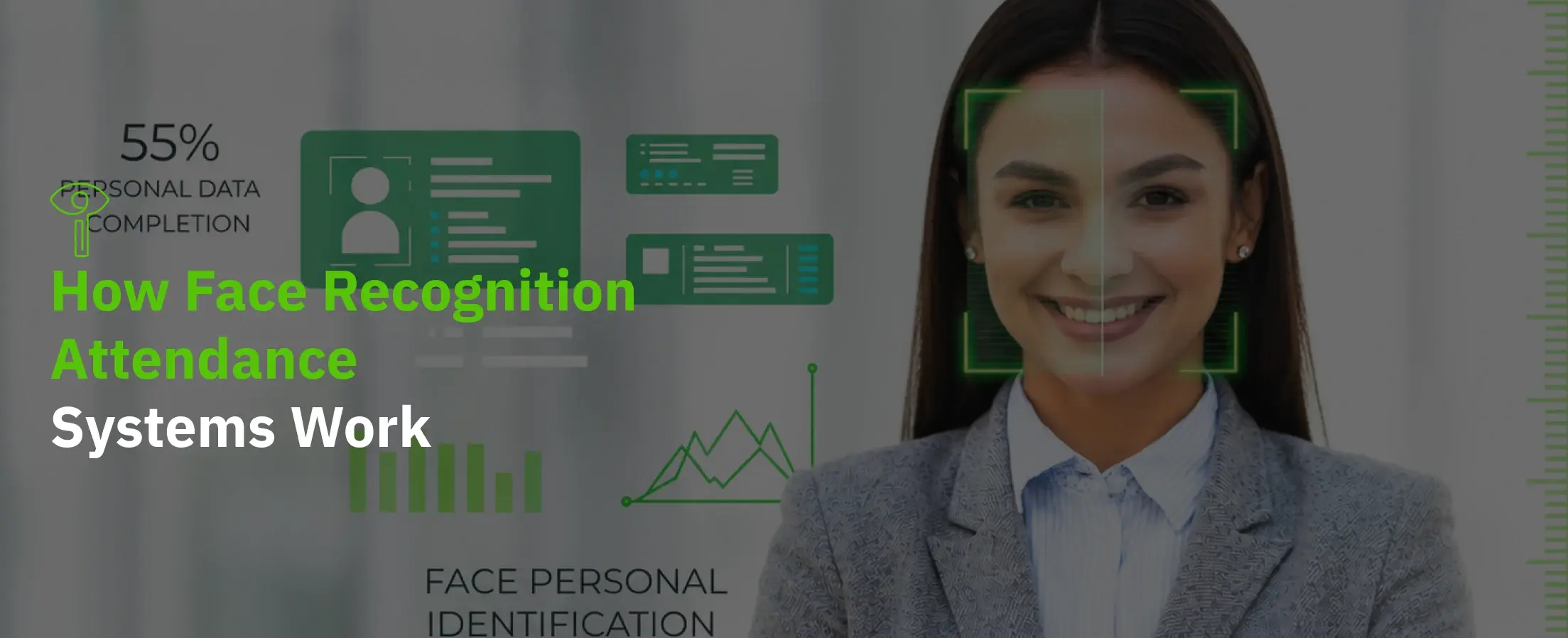
A face recognition attendance system is a digital attendance solution that uses a camera and facial recognition technology to identify employees and record their attendance.
Every employee's face acts as their unique identity.
Unlike ID cards or PIN numbers, faces cannot be forgotten, borrowed, or easily duplicated. This makes attendance more accurate and secure.
Most modern face recognition systems work with:
The employee simply looks at the camera, and the software identifies them almost instantly.
Traditional attendance methods have several limitations.
Paper attendance sheets consume time and are prone to mistakes.
Problems include:
Employees often lose or damage punch cards.
Common issues include:
PINs are convenient but insecure.
Employees can:
RFID cards have improved attendance management, but they still require employees to carry a physical card.
Problems include:
Fingerprint systems became popular because fingerprints are unique.
However, many businesses now face issues like:
Face recognition solves many of these problems while providing a faster and contactless experience.
Many people assume face recognition is complicated.
In reality, the process is simple.
Before the system can recognize employees, each person's face must be registered.
The HR team captures one or more images of every employee using the camera.
The software studies important facial features such as:
Instead of saving a normal photo, the software creates a secure digital facial template used for future matching.
When employees arrive at work, they simply stand in front of the attendance kiosk.
No fingerprint.
No ID card.
No PIN.
The camera automatically detects the face.
The software first checks whether a human face is present.
It identifies:
Modern systems work well even if employees wear glasses or have different hairstyles.
The detected face is compared with the registered employee database.
Within seconds, the system finds the closest match.
If a match is found, the employee's profile appears.
Once verified, attendance is marked automatically.
The system records:
Many modern systems also capture a live image during check-in for additional verification.
Today's systems offer much more than basic attendance.
Some advanced features include:
A live photo is captured every time attendance is recorded.
This creates visual proof of every check-in and check-out.
Employees and HR teams can review complete attendance records, including:
Attendance data flows directly into payroll.
This removes manual calculations and reduces payroll errors.
Attendance systems often connect with leave management.
If an employee has approved leave, attendance updates automatically.
Every attendance record is linked to the actual employee.
This reduces manual mistakes and incorrect records.
Most employees complete attendance within two seconds.
This helps reduce queues during office hours.
Unlike fingerprint machines, employees don't need to touch any device.
This creates a cleaner and more comfortable workplace.
One employee cannot mark attendance for another.
Every attendance entry requires the actual person's face.
Since attendance is recorded automatically, payroll calculations become much more reliable.
This reduces disputes related to salaries and overtime.
HR teams spend less time correcting attendance records and more time focusing on employee development and business growth.
You may also find this helpful - Trackar: Smart HR Management Software for Modern Businesses
Reality:
Small businesses benefit just as much.
Even if you have 20 employees, face recognition can save time and improve attendance accuracy.
Reality:
Modern systems are designed for everyone.
Employees simply stand in front of the camera and tap Check In or Check Out.
No technical knowledge is required.
Reality:
Most face recognition systems identify employees in just a few seconds.
The entire attendance process is usually faster than scanning a fingerprint or entering a PIN.
Reality:
Many modern solutions work with:
Businesses don't always need costly biometric devices.
Micra Digital has developed a native Face Recognition Attendance solution, Trackar, that makes attendance simple, secure, and reliable.
Unlike traditional attendance machines, the solution works directly within your Odoo environment.
Attendance is much more than recording when employees arrive at work.
It directly affects payroll, productivity, workforce planning, and employee accountability.
Whether you run a manufacturing company, retail business, hospital, school, or corporate office, face recognition attendance can help save time, improve accuracy, and make daily operations easier.
Modern face recognition systems are highly accurate when employees are registered with clear images, and the camera has proper lighting. Many systems recognize faces within seconds.
No. Since attendance is linked to each employee's face, another person cannot check in on their behalf. This helps prevent buddy punching.
Not necessarily. Trackar face recognition attendance systems work with standard phones, laptops, or tablets, depending on the setup.
Manufacturing, retail, healthcare, education, hospitality, logistics, corporate offices, and service-based businesses all benefit from faster, more accurate attendance management.
Let Odoo take your business to the next level!
Contact us and take the next step!
Follow Our Adventures!

Ready to launch your next project?

Company
Copyright © 2020. micra.digital. All rights reserved.