- Company
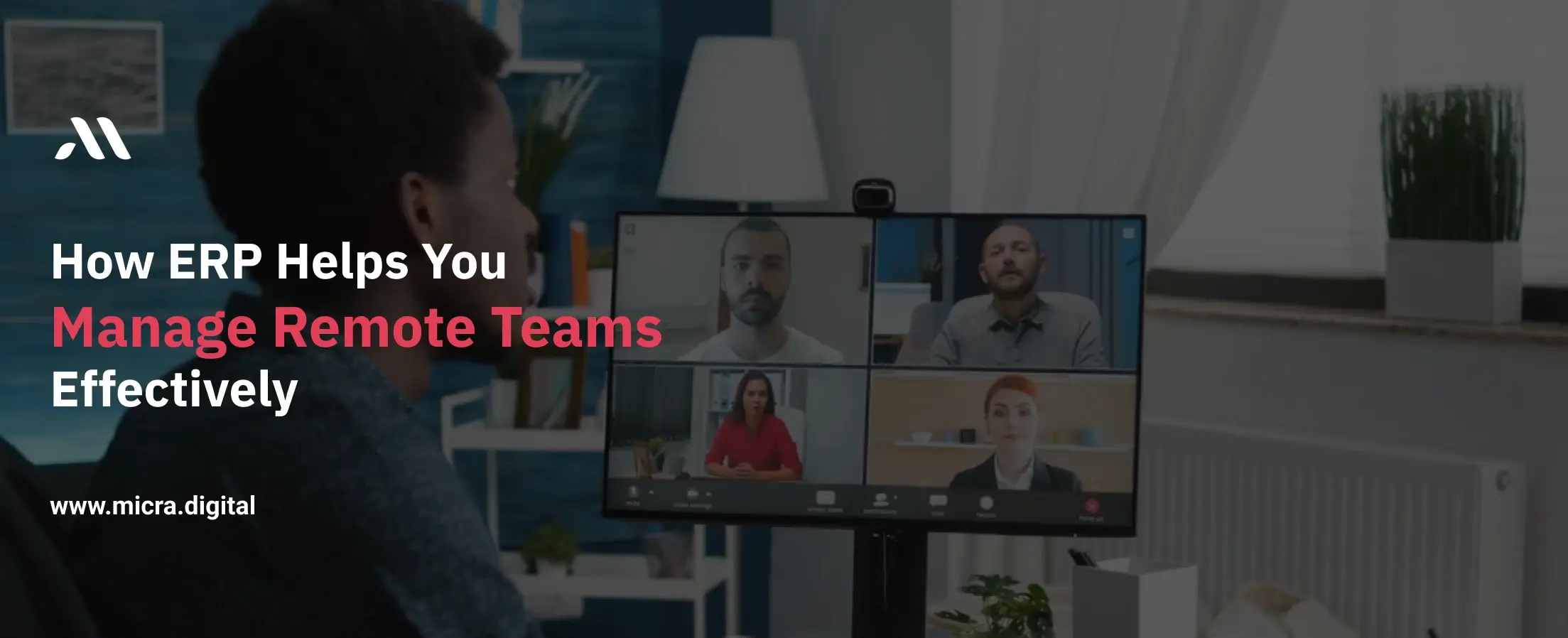
The modern workplace has changed dramatically. With remote and hybrid teams becoming the new norm, businesses need smarter ways to manage people, projects, and performance regardless of where employees are located.
But here’s the challenge: how do you maintain visibility, accountability, and efficiency when your team is spread across different locations (and sometimes, time zones)?
That’s where an ERP (Enterprise Resource Planning) system steps in. Tools like Odoo ERP have evolved from simple accounting or inventory systems to powerful, all-in-one business management solutions that can help manage remote teams effortlessly.
In this blog, we’ll explore how ERP helps you manage remote teams effectively, why it’s essential in today’s business landscape, and how you can get the most out of it, especially with support from ERP experts like Micra Digital.
According to a 2024 report by Buffer, more than 62% of employees work remotely at least part of the week. While this offers flexibility and access to global talent, it also introduces challenges like:
Businesses that fail to manage these challenges risk missed deadlines, reduced collaboration, and declining productivity.
This is where ERP software provides a structured way to manage everything, from daily operations to team collaboration, under one digital roof.
.jpg)
An ERP system integrates all your business operations, HR, finance, sales, inventory, and projects into one platform.
When your team is working remotely, ERP ensures that everyone has access to real-time data, assigned tasks, and performance metrics. It replaces manual coordination with automation and transparency.
Here’s how:
Let’s break down the specific ways ERP supports remote teams and enhances productivity.
Communication is the backbone of remote work. ERP solutions come with built-in chat, discussion forums, and real-time notification systems.
For example, in Odoo ERP, every project or document has an integrated communication thread. This means no lost emails, no missed messages, just transparent and traceable communication.
One of the biggest issues with remote teams is the lack of up-to-date data.
With ERP, every update, whether it’s a sales order, inventory change, or HR status, is reflected instantly. This ensures every team member, no matter where they are, is working with the same information.
This level of transparency prevents duplication, miscommunication, and delays.
Example:
A sales executive working from home can instantly check stock availability through ERP before confirming a customer order, without needing to call the warehouse.
Managing remote projects becomes effortless with ERP’s project and task modules.
You can:
ERP also supports Gantt charts and Kanban boards, helping you visualise workflows and identify bottlenecks.
Remote HR operations can be complex, managing attendance, payroll, and leave requests across multiple time zones.
ERP makes it simple with modules for:
Managers can approve requests in one click, and employees can view payslips or apply for leave directly from the system.
Remote work increases the risk of data breaches and unauthorised access.
Modern ERP solutions use role-based permissions, encryption, and secure authentication protocols to safeguard business information.
Admins can monitor login activity and restrict access to sensitive data like finances or HR records.
Tip: Choose an ERP with multi-factor authentication (MFA) and IP restrictions to add an extra layer of security.
Remote leaders often struggle with visibility: “What’s happening right now?”
ERP systems provide instant reports and dashboards on:
With real-time analytics, business owners can make faster, data-driven decisions instead of waiting for weekly updates.
Before you jump in, here are a few common pitfalls to avoid:
Not Training the Team Properly:
Even the best ERP software fails without proper onboarding.
Ignoring Integration Needs:
If your remote teams use tools like Slack or Trello, make sure the ERP integrates with them.
Skipping Data Migration Checks:
Clean, structured data is crucial for smooth ERP performance.
No Continuous Monitoring:
ERP isn’t a one-time setup; monitor KPIs regularly to ensure efficiency.
At Micra Digital, we specialise in helping businesses implement Odoo ERP that supports modern, hybrid, and remote teams.
Our experts handle:
We don’t just install ERP, we make sure it works perfectly for your remote business environment.
Managing remote teams can be challenging, but with the right ERP solution, it becomes a smooth, structured, and rewarding experience.
Odoo ERP offers everything you need, from collaboration and HR management to analytics and project tracking, in one cloud-based platform.
If you’re ready to empower your remote workforce and drive real productivity, it’s time to explore ERP with experts who understand your business.
ERP includes internal chat, project discussions, and instant notifications, keeping communication linked to specific tasks or projects.
Yes. ERP provides dashboards and reports that measure productivity, task completion, and project timelines for each employee.
It depends on your business size and the modules required. On average, with a partner like Micra Digital, implementation can take 6–12 weeks.
Let Odoo take your business to the next level!
Contact us and take the next step!
Follow Our Adventures!

Ready to launch your next project?

Company
Copyright © 2020. micra.digital. All rights reserved.