- Company
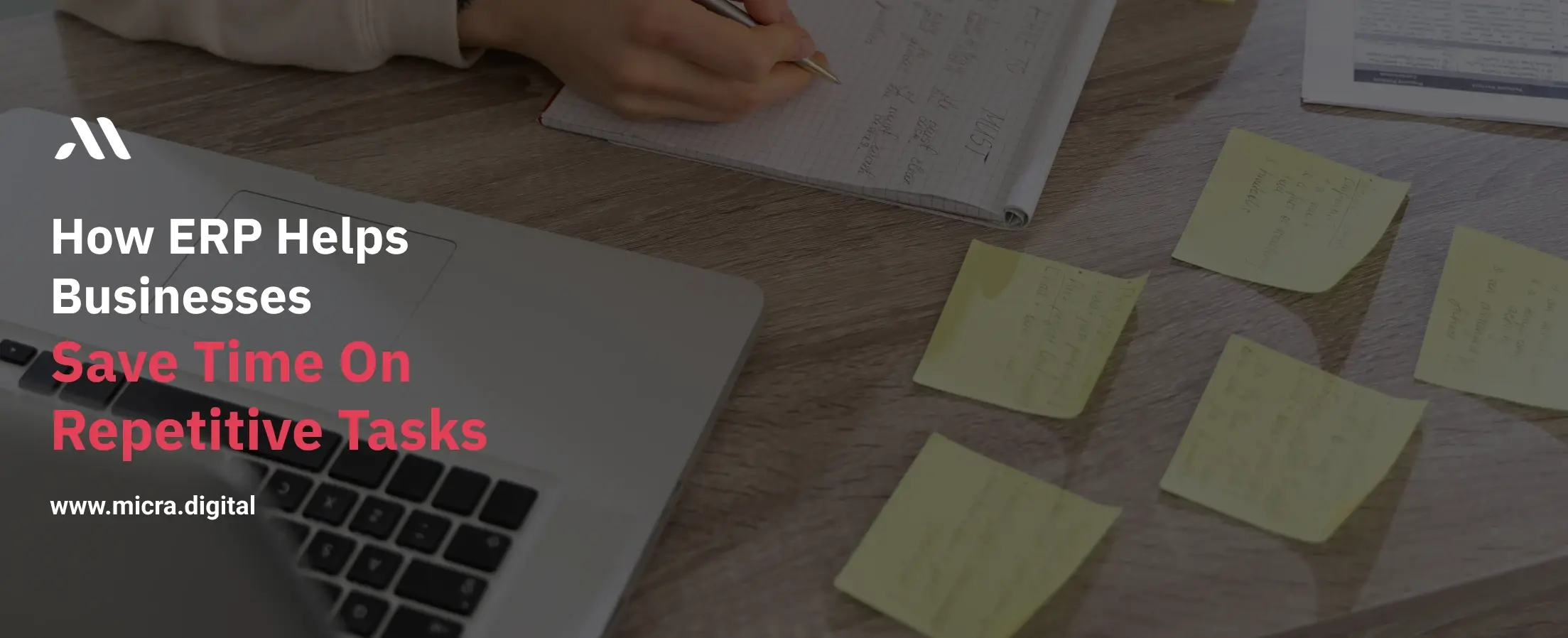
Running a business means juggling multiple tasks like processing invoices, updating inventory, managing employees, following up with customers, and so on.
While all of this is necessary, it often eats up hours of your team’s day.
That’s where an ERP (Enterprise Resource Planning) system steps in.
Modern tools like Odoo ERP are designed to take repetitive, time-consuming work off your plate, so your team can focus on strategy, innovation, and growth.
Let’s explore how ERP simplifies everyday operations and saves businesses valuable time.
Also Read: ERP for Startups vs Established Businesses. What Changes?
.jpg)
Without ERP, data is scattered, customer information in one file, invoices in another, and inventory in a third. Searching, updating, or cross-checking becomes a manual nightmare.
With Odoo ERP, all your business data sits in one integrated platform.
When a new order comes in, it automatically updates the inventory, triggers an invoice, and notifies the delivery team, all in seconds.
Time Saved: No more switching between spreadsheets or reconciling data from different sources.
Bonus: Real-time visibility across all departments.
Manual accounting tasks, entering invoices, verifying payments, and matching transactions consume hours every week. Mistakes are common, especially when multiple team members handle data entry.
Odoo ERP automates this entire process.
It generates invoices automatically, matches them with purchase orders, sends payment reminders, and even records journal entries.
Example:
A retail store using Odoo ERP can auto-generate invoices for hundreds of sales every day without typing a single line manually.
Time Saved: Accounting teams can now focus on analysis instead of repetitive entry.
Inventory tracking is one of the most repetitive jobs in retail, manufacturing, or e-commerce.
Manually updating stock after every sale is not only time-consuming it also leads to errors and stockouts.
With ERP, your stock updates automatically after each transaction.
Odoo’s Inventory module even tracks product batches, expiry dates, and reordering levels, ensuring you never run out of fast-moving items.
Time Saved: Real-time updates mean no manual stock reconciliation.
Bonus: Accurate inventory helps reduce dead stock and losses.
Imagine manually calculating employee attendance, overtime, and monthly pay. It’s tedious, and mistakes can easily hurt employee trust.
With ERP, HR and payroll tasks become automatic.
Odoo ERP tracks attendance, manages leave, calculates salaries, and generates payslips in one go.
Time Saved: HR teams spend less time on paperwork and more on employee engagement.
Bonus: Built-in analytics help track productivity and performance easily.
Sales teams waste hours updating customer details, following up on leads, and manually creating quotes.
ERP systems like Odoo simplify all of it by automating lead capture, quote generation, and follow-up reminders.
Example:
When a new lead fills out a form on your website, Odoo CRM automatically creates a record, assigns it to the right salesperson, and schedules a reminder for follow-up.
Time Saved: Manual data entry is replaced by smart automation.
Bonus: Improved customer experience and faster conversions.
Preparing weekly or monthly performance reports often means copying data from different sheets, a repetitive and error-prone task.
Odoo ERP generates reports automatically, whether it’s sales trends, expenses, profits, or inventory turnover.
You can even schedule automated reports to land in your inbox every morning.
Time Saved: No manual number crunching.
Bonus: Decision-making becomes faster and data-driven.
Every business deals with multiple vendors; sending purchase orders, tracking deliveries, and verifying invoices.
Doing this manually is slow and repetitive.
Odoo ERP’s Purchase module automates it all.
It creates purchase orders based on stock levels, tracks vendor performance, and ensures timely reordering.
Time Saved: Automatic reordering and approval workflows reduce manual workload.
Bonus: Improved supplier relationships through transparency.
When teams manage projects using spreadsheets or emails, repetitive coordination slows everything down.
ERP tools like Odoo Projects assign tasks, set deadlines, and send automatic reminders, keeping teams aligned.
Time Saved: Less micromanagement, more productivity.
Bonus: Every project stays on track without extra meetings.
Repetitive manual entry often leads to duplicate records, wrong entries, and confusion between departments.
An ERP system eliminates that by syncing every action across modules in real time.
Example: When the sales team records a new order, it automatically updates finance, inventory, and shipping, without anyone re-entering data.
Time Saved: No double-checking or cross-verifying entries.
Bonus: Data accuracy across the company.
Manual systems create delays in reporting, approvals, and communication.
With Odoo ERP, you get real-time dashboards showing KPIs, stock levels, and sales numbers, helping you act fast.
Time Saved: No waiting for reports or updates from teams.
Bonus: Managers can make informed decisions anytime, anywhere.
What makes Odoo stand out is its modular structure and simplicity.
You can start small with just accounting or inventory and add modules as your business grows.
Odoo’s automation tools are built to handle repetitive tasks for:
Whatever your industry, Odoo ERP saves hours every day by connecting all operations under one intelligent system.
Repetitive tasks may seem small, but over time, they cost businesses hundreds of hours and thousands of dollars.
By automating these processes through ERP, you not only save time but also build a more efficient, data-driven organization.
At Micra Digital, we help startups and enterprises implement Odoo ERP systems that cut down manual work, boost productivity, and save time.
From setup to customization, we make sure your system fits your business, not the other way around.
ERP automates accounting, inventory, HR, reporting, and communication between departments.
Odoo automates repetitive work from invoice generation to stock updates, all from one dashboard.
Yes! Modern ERP systems like Odoo are affordable, modular, and designed for startups and SMEs.
Absolutely. You can add or remove modules based on your industry and growth stage.
Micra Digital specializes in Odoo ERP implementation, helping businesses automate repetitive tasks and focus on innovation instead of administration.
Let Odoo take your business to the next level!
Contact us and take the next step!
Follow Our Adventures!

Ready to launch your next project?
Company
Copyright © 2020. micra.digital. All rights reserved.