- Company
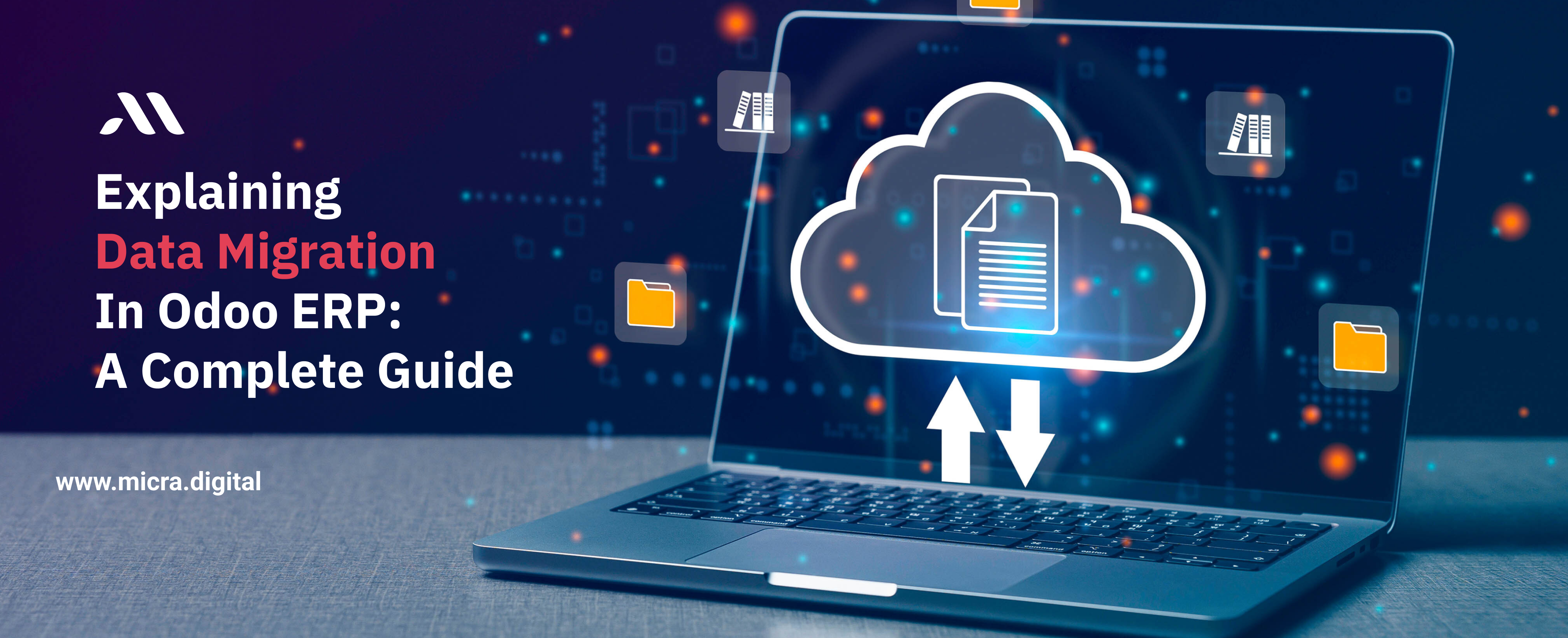
Data migration, the process of transferring your business's existing data into a new Odoo ERP system, is a critical step toward unlocking the full potential of your cloud ERP solution. Done well, it supports accurate operations, enhances reporting, and builds trust among users. Done poorly, it can derail the entire project.
Data migration is the structured process of extracting information (like customers, inventory, sales, and accounting records) from legacy systems, transforming it into the format used by Odoo, and loading it into the new ERP database, commonly referred to as ETL (Extract–Transform–Load). This is essential for ensuring:
1. Keeps Business Running
Without access to contacts, invoices, or inventory data, operations halt, impacting everything from order fulfillment to payroll.
2. Boosts User Confidence
79 % of successful ERP projects include strong data validation and a clear migration process.
3. Improves Decision Making
Reliable data gives you accurate insights and forecasting ability, crucial for growth.
4. Ensures Compliance & Security
Handled properly, migration formats sensitive data correctly and avoids legal traps.
5. Sets Up for Scale
Cloud ERP grows with your business, but only if the foundation is sound. Clean, accurate data enables that expansion.
.jpg)
This is the most crucial phase. It involves understanding what data needs to be migrated, where it currently resides, and how it maps to the Odoo data model.
Once you know what data you need, the next step is to pull it out of your legacy systems.
This is often the most challenging part of data migration. It’s where the extracted data is cleaned, converted, and re-formatted to fit Odoo's specific requirements.
This involves importing the transformed data into your Odoo ERP.
This crucial phase ensures that the migrated data is accurate, complete, and functional within Odoo.
The type of data and its complexity vary by industry, influencing your Odoo migration strategy.
Data: Bills of Materials (BOMs), routings, production orders, machine specifications, raw material inventory, finished goods inventory, vendor details, quality control records.
Challenge: Complex multi-level BOMs and routings, ensuring material traceability, high volume of historical production data.
Data: Menu items, recipes, ingredient inventory, supplier details, POS sales history, customer loyalty data, employee schedules.
Challenge: Perishable inventory management, high volume of daily sales transactions, recipe management with sub-components.
Data: Product catalogs (SKUs, descriptions, pricing, images), customer data, sales history (online and in-store), supplier information, and inventory levels across multiple locations.
Challenge: Large product catalogs, managing multiple store inventories, complex pricing rules, and customer loyalty program data.
Data: Student records (demographics, enrollment, grades, attendance), course catalogs, faculty information, alumni data, and financial aid records.
Challenge: Sensitive student data privacy, complex student-course-grade relationships, and managing historical academic records over many years.
Data: Patient demographics, appointment history, billing information, insurance details, medical supply inventory, and administrative notes.
Challenge: High volume of sensitive patient data, strict regulatory compliance (e.g., HIPAA), complex billing codes, and managing medical supplies inventory.
Data migration isn't just a technical task; it’s the foundation of a successful Odoo ERP rollout. The right process ensures:
At Micra Digital, we support companies across manufacturing, restaurant, retail, education, and healthcare in mastering data migration and realizing real ROI.
Depends on data volume and complexity. Small businesses: 4–6 weeks; large enterprises: 3–6 months.
Yes. Clean and import critical data; archive non-essential info.
Minimal. Plan for a short migration window and keep the legacy system accessible until validated.
Data must be encrypted during transfer, access limited to necessary staff, and logging enabled.
While doable internally, experienced partners reduce risk. 85% of successful projects use them.
Let Odoo take your business to the next level!
Contact us and take the next step!
Follow Our Adventures!

Ready to launch your next project?
Company
Copyright © 2020. micra.digital. All rights reserved.