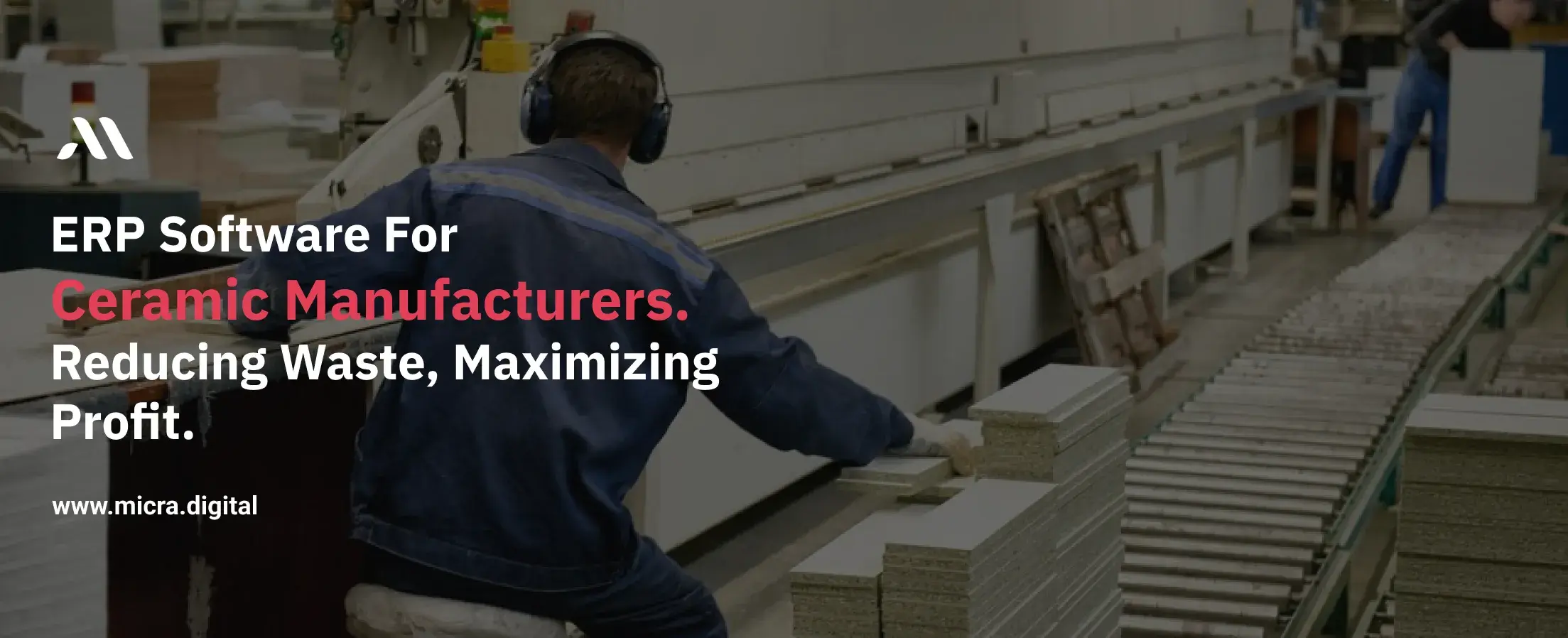
ERP software for Ceramic Manufacturers. Reducing Waste, Maximizing Profit.
The ceramics industry, a cornerstone of both traditional craftsmanship and modern manufacturing, faces a unique set of challenges. From sourcing and mixing raw materials like clay, silica, and feldspar to the delicate processes of forming, drying, firing, and glazing, every step in ceramic production is prone to variables that can lead to waste, inefficiency, and ultimately, reduced profits.
This is where an advanced ERP software system becomes not just a tool, but a necessity.
Gone are the days when spreadsheets and manual record-keeping could keep up with the complexities of modern ceramics manufacturing. To genuinely reduce waste and maximize profit, businesses need an integrated solution that provides real-time visibility and control over every aspect of their operations.
An Enterprise Resource Planning (ERP) system is designed to do just that. This in-depth blog will explore how an ERP system, specifically a flexible and comprehensive ERP like Odoo, can revolutionize operations for ceramic manufacturers, helping them to cut down on waste and dramatically increase their profitability.
Also Read: Top Reasons to Move Your Business to a Cloud-Based ERP System
The Challenges Facing Ceramic Manufacturers: Where Waste Hides
Before we dive into the solutions, let's understand the common pain points that often lead to waste and hinder profit in the ceramics industry:
- Raw Material Inconsistency: Variations in raw material quality can impact product durability and aesthetics, leading to defects later in the process.
- High Rejection Rates: Imperfections during forming, drying, or firing often result in discarded products, increasing material and energy waste. Approximately 30% of raw materials used in ceramic production can end up as waste, particularly polishing sludge and broken pieces.
- Suboptimal Inventory Management: Overstocking raw materials ties up capital, while understocking leads to production delays. Managing finished goods inventory (tiles, sanitary ware, crockery) also requires precision to avoid obsolescence or stockouts.
- Inefficient Production Scheduling: Poor planning can lead to bottlenecks, idle machinery, excessive energy consumption (especially kilns), and extended lead times.
- Lack of Traceability: Difficulty in tracing defective batches back to their raw material source or specific production run makes root cause analysis difficult and increases recall risks.
- Manual Data Entry and Errors:Relying on paper records and manual spreadsheets is time-consuming, prone to errors, and lacks real-time insights, affecting overall product management.
- Maintenance Downtime:Unplanned machinery breakdowns, especially kilns or presses, can halt production, leading to significant losses.
.jpg)
Odoo ERP: Your Blueprint for Leaner, More Profitable Ceramics Production
Odoo, a leading open-source ERP system, offers a comprehensive suite of integrated applications that are particularly well-suited to address the intricate demands of ceramics manufacturing.
1. Precise Inventory Management: The Foundation of Waste Reduction
Effective inventory management is paramount in the ceramics industry, where raw materials can degrade, and finished products can be subject to breakage or obsolescence. Odoo ERP provides real-time visibility into your entire inventory, from incoming raw materials to work-in-progress and finished goods.
- Raw Material Tracking:Odoo ERP allows you to track specific batches of raw materials (clay, glazes, pigments) as they arrive, noting their quality and origin. This ensures you use the best materials and can trace any issues back to the source, reducing initial defects.
- Automated Reordering:Set up minimum and maximum stock levels within Odoo ERP. When raw materials or components hit a low threshold, the ERP system can automatically generate purchase orders, preventing stockouts and ensuring continuous production management. This also helps avoid over-ordering, tying up less capital, and reducing storage costs.
- Work-in-Progress (WIP) Visibility: Track materials as they move through different stages of production management, from mixing and forming to drying and glazing. This real-time view helps identify bottlenecks and potential waste points in your ceramics process.
- Finished Goods Optimization: Monitor finished product inventory across various warehouses or showrooms. Odoo ERP helps you understand sales trends, allowing for better forecasting and reducing the risk of overproduction or obsolescence of specific ceramic designs.
- Barcode and Lot Tracking:Implement barcode scanning with Odoo ERP to quickly receive, move, and dispatch inventory. Lot tracking ensures full traceability of every ceramic product, allowing you to manage quality and pinpoint issues if a defective batch is identified.
2. Intelligent Production Management: Beyond the Kiln
The heart of any ceramics factory is its production line, involving precise steps and often energy-intensive processes like firing. Odoo ERP provides comprehensive tools for production management to optimize these critical stages.
- Bill of Materials (BOM) Management:Odoo ERP allows for detailed multi-level BOMs, outlining every raw material and component needed for each ceramic product, along with the quantities. This ensures accurate material planning and reduces waste from over-issuing or miscalculating needs.
- Work Order Creation & Tracking: Generate work orders directly from sales orders or production forecasts. Odoo ERP enables you to track the progress of each work order in real-time, from mixing to packing, identifying any delays or issues.
- Machine and Workcenter Management: Define your work centers (e.g., molding area, glaze application, different kilns) and their capacities within Odoo ERP. This helps in effective scheduling and load balancing, preventing bottlenecks and maximizing machine utilization.
- Kiln Scheduling Optimization: This is crucial for ceramics. Odoo ERP can help schedule kiln loads efficiently, grouping products with similar firing requirements to maximize energy efficiency and minimize empty kiln space, thereby reducing energy waste and cutting costs.
- Real-Time Data for Decisions:Production data from the shop floor is fed directly into the ERP system. Managers can view live dashboards showing production progress, machine utilization, and defect rates, enabling quick adjustments to avoid larger issues.
3. Product Management: Ensuring Quality and Reducing Rejections
Quality control is vital in the ceramics industry, where defects can be costly. Odoo ERP empowers manufacturers to embed quality checks throughout the product management lifecycle, from raw material inspection to final packaging.
- Quality Control Points: Set up automated quality checks at various stages of your production management process within Odoo ERP. For example, inspect raw clay consistency upon arrival, check dimensions after forming, or verify glaze application before firing.
- Defect Tracking and Analysis: When defects occur, record them directly in Odoo ERP. Track the type of defect, its location, and the quantity affected. This data helps in identifying patterns and root causes, enabling continuous improvement and reducing future waste.
- Batch Traceability:As mentioned in inventory management, the ability to trace a defective batch of ceramic tiles or sanitary ware back to its specific production run, raw materials, and even the technician involved is invaluable for problem-solving and minimizing large-scale rejections.
- Standard Operating Procedures (SOPs):Store and manage SOPs within Odoo ERP to ensure consistent processes across all shifts and operators, directly impacting product quality and consistency.
4. Financial Oversight and Profit Maximization:
Ultimately, all operational improvements translate to financial benefits. Odoo ERP provides the tools to gain clearer financial insights and directly impact your bottom line.
- Accurate Costing: With precise inventory management and production management data, Odoo ERP helps calculate the true cost of each ceramic product, including raw materials, labor, energy, and overhead. This accurate costing is essential for competitive pricing and profit margins.
- Waste Cost Analysis: By tracking waste quantities and associated costs within Odoo ERP, you can clearly see the financial impact of inefficiency, helping to justify investments in waste reduction initiatives.
- Sales and Forecasting: Integrate your sales data with production management in Odoo ERP to create more accurate sales forecasts. Better forecasts lead to optimized production management and inventory management, preventing overproduction (waste) and underproduction (lost sales).
- Reduced Administrative Costs:Automating tasks like purchase order generation, invoice creation, and data entry reduces the need for manual work, freeing up staff and cutting administrative overhead.
Final Thoughts
In the ceramics business, every gram of raw material and every hour in the kiln counts. With Odoo, you gain control over your resources, reduce avoidable losses, and create a more efficient path to profitability.
If you're ready to simplify your operations, reduce waste, and grow your business, it's time to go beyond spreadsheets.
Contact Micra Digital today and see how ERP can change the way you work, for good.
FAQ’s
1. How long does it take to implement Odoo in a ceramic manufacturing unit?
Typically, implementation takes 4–8 weeks, depending on the complexity of your operations and the number of modules.
2. Is Odoo ERP suitable for both small-scale and large-scale ceramic manufacturers?
Yes, Odoo ERP is highly modular and scalable. Smaller manufacturers can start with core modules like inventory management and production management, while larger enterprises can implement a full suite of applications and customize them extensively to fit their complex operations.
3. Can I use Odoo only for inventory without using the full ERP?
Absolutely. You can start with just inventory management software and scale up as needed.
4. How does Odoo ERP help reduce waste in ceramic manufacturing?
Odoo ERP reduces waste through precise inventory management (preventing overstocking and stockouts).
5. Can I integrate Odoo with my existing e-commerce or POS system?
Yes. Odoo integrates with Shopify, WooCommerce, POS systems, and other tools to ensure smooth business operations.