- Company
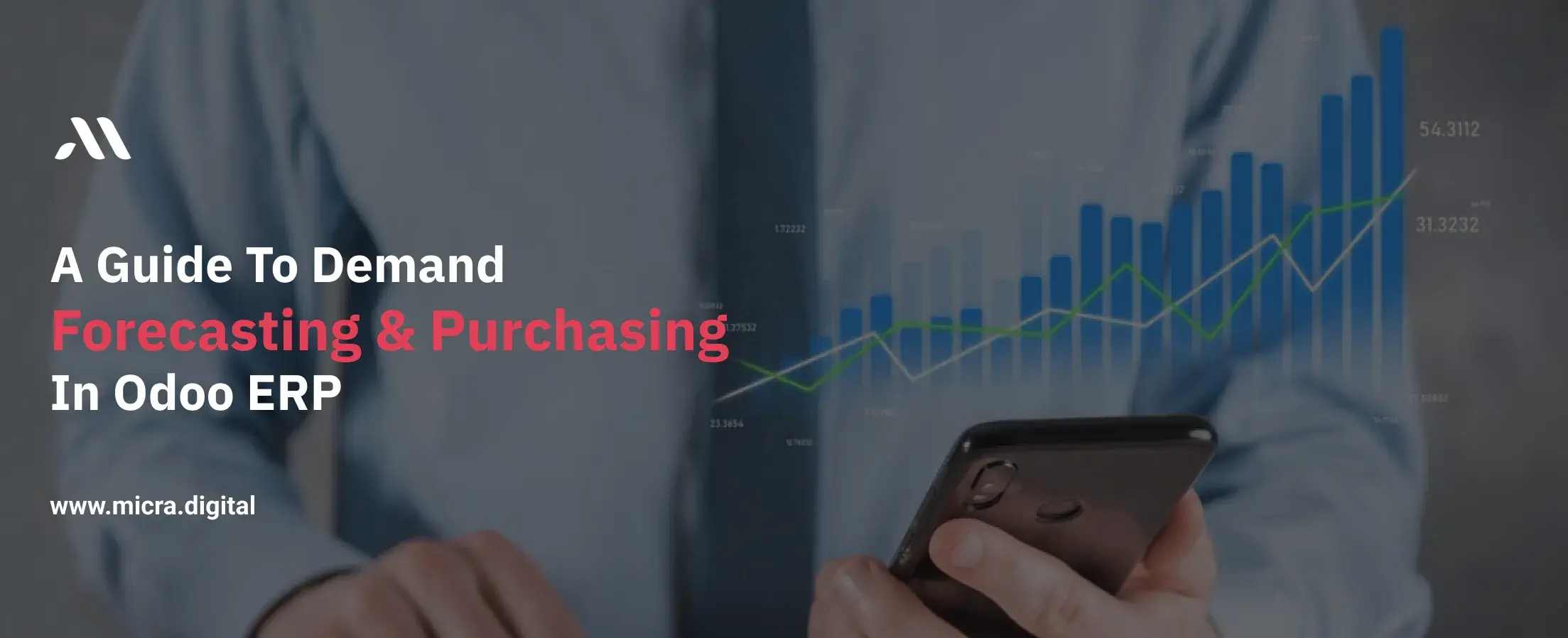
Running a business without accurate demand forecasting is like driving blindfolded—you might move forward, but you’re bound to crash. Whether you’re managing a factory, a restaurant, a retail store, or a school, predicting demand and managing purchases efficiently is key to staying competitive.
That’s where Odoo ERP comes in. This powerful tool helps businesses master demand forecasting and purchasing, ensuring you always have the right stock at the right time.
This blog explores how Odoo ERP simplifies demand forecasting and purchasing, helping businesses across industries reduce costs, avoid stockouts, and improve customer satisfaction. You’ll learn practical tips, real-world examples, and why this tool is a game-changer for your operations.
Accurate demand forecasting and efficient purchasing are critical because:
Odoo ERP solves these challenges by automating workflows and providing data-driven insights.
Stat Alert:
Businesses using tools like Odoo ERP for demand forecasting and purchasing reduce inventory costs by 20%(Source: Aberdeen Group).
85% of companies say accurate forecasting improves customer satisfaction (Source: Gartner).
Odoo ERP is an all-in-one business management platform. Its demand forecasting and purchasing features help businesses predict demand, manage inventory, and automate procurement.
Key Features of Odoo ERP for Demand Forecasting and Purchasing
 (2).webp)
What It Does:
Analyze historical sales data to predict future demand.
Example:
A retail store uses Odoo ERP to forecast holiday sales, ensuring enough stock of popular items.
Tip: Use seasonal trends and promotions to refine forecasts.
What It Does:
Set reorder points to automatically purchase stock when levels are low.
Example:
A restaurant uses Odoo ERP to reorder ingredients like flour and oil, reducing kitchen shortages by 30%.
Stat: Automation reduces manual errors in purchasing by 50% (Source: McKinsey).
What It Does:
Track supplier performance, negotiate better terms, and manage purchase orders.
Example:
A factory uses Odoo ERP to compare supplier prices, saving $10,000 annually on raw materials.
Note: Build strong relationships with reliable suppliers to avoid delays.
What It Does:
Monitor stock levels across multiple locations in real-time.
Example:
A school uses Odoo ERP to track supplies like stationery and lab equipment, ensuring no shortages during exams.
What It Does:
Generate reports on sales trends, inventory turnover, and supplier performance.
Stat: Businesses using analytics for demand forecasting and purchasing see 15% lower costs (Source: Deloitte).
Look at six to twelve months of historical data in Odoo ERP to identify patterns and trends.
For example, if certain products perform better in summer, adjust purchasing cycles accordingly.
Check seasonal demand spikes and external market trends before purchasing inventory.
For example, retailers often see a rise in demand during Black Friday and holiday seasons, requiring additional stock planning.
According to Harvard Business Review, businesses that adjust purchases based on market trends increase sales by 25 percent.
Check supplier lead times before finalizing orders. If delivery times are long, place orders earlier.
For example, a restaurant that orders specialty ingredients from overseas should account for long shipping times in its demand planning.
Tip: Use Odoo ERP’s supplier performance reports to track which vendors deliver stock reliably and on time.
Always keep backup inventory for fast-moving or critical products.
For example, a healthcare center should always have an additional stock of essential medicines to avoid shortages.
Note: Use Odoo ERP’s automated reordering feature to maintain safety stock without over-purchasing.
Market conditions change frequently, so businesses should update demand forecasts every month in Odoo ERP.
For example, businesses should adjust purchasing plans immediately if a product suddenly becomes popular due to social media trends.
According to Supply Chain Digital, businesses that update demand forecasts regularly reduce excess inventory by 30 percent.
Demand forecasting and purchasing don’t have to be guesswork. With Odoo ERP, you can predict demand accurately, automate purchases, and keep your business running smoothly—no matter your industry.
Ready to Optimize Your Inventory? Try Odoo ERP Free for 14 Days!
Yes, Odoo ERP tracks demand across multiple warehouses, stores, and sales channels for accurate forecasting.
Odoo ERP analyzes past seasonal trends and suggests stock adjustments before high-demand periods.
Yes, Odoo ERP allows direct supplier integration for automated purchase orders and faster restocking.
Odoo ERP works for businesses of all sizes, from startups to large enterprises.
It is best to review demand forecasts monthly and adjust based on sales trends and market conditions.
Let Odoo take your business to the next level!
Contact us and take the next step!
Follow Our Adventures!

Ready to launch your next project?
Company
Copyright © 2020. micra.digital. All rights reserved.